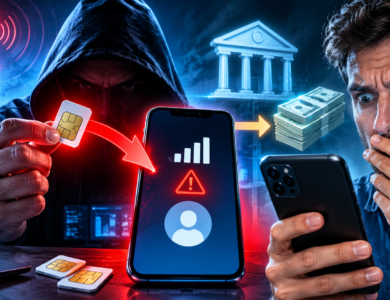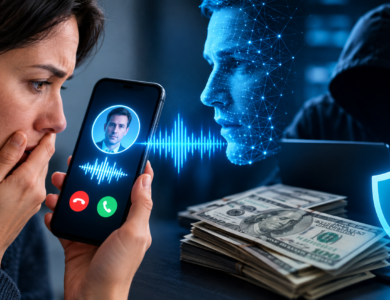
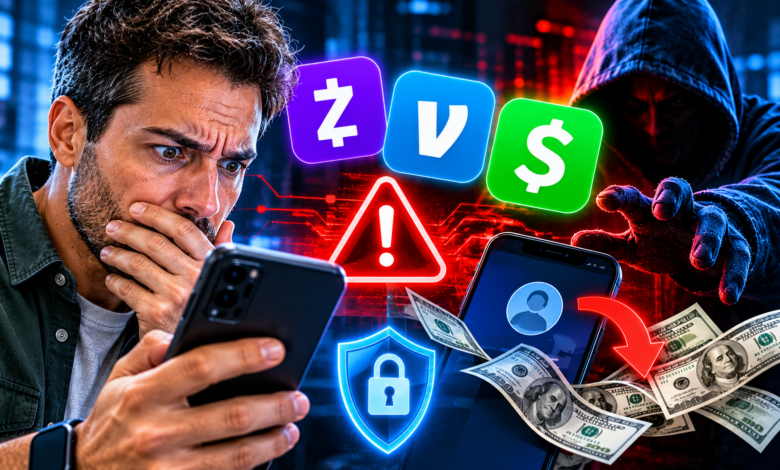
Payment app scams are one of the fastest-growing types of fraud, and Zelle, Venmo and Cash App are among the platforms where they happen most. The short answer: these apps send money instantly and rarely let you take it back, so scammers trick you into sending it yourself. This guide explains how the scams work, how to spot them and what to do if you’ve already been hit.
Why Scammers Target Zelle, Venmo and Cash App
Peer-to-peer (P2P) payment apps have changed how people handle everyday money. You can split a restaurant bill, pay a babysitter or send rent to a landlord in a few taps, usually in seconds and often for free. That speed and simplicity is exactly why payment app scams have become so common.
Scammers go where money moves quickly. On Zelle, Venmo and Cash App, a payment can reach the recipient almost instantly, and the funds are often gone before a victim realizes something is wrong. There is no waiting period, no signature and no cashier who might say, “This looks suspicious.”
These apps were also built on trust. They were designed for sending money to friends, family and people you already know. When a stranger pretends to be someone you can trust, the app’s convenience works against you.
Finally, fraud on these platforms rarely involves hacking. In most cases the scammer doesn’t break into your account at all. They use urgency, fear, friendliness or a too-good-to-be-true offer to convince you to send the money yourself. This is known as authorized payment fraud, and it is the hardest type to recover from.
Millions of people use these apps every day, which gives criminals a huge pool of potential victims. They only need a small percentage to fall for a script to make the effort worthwhile. That is why a basic understanding of how these scams work is one of the best defenses you have.
How Peer-to-Peer Payments Differ From Credit Cards
Many people assume a payment app works like a credit card. It doesn’t, and that gap is where a lot of victims get hurt.
When you pay with a credit card, federal law gives you strong dispute rights. If a merchant never delivers, or someone uses your card without permission, you can dispute the charge and your liability is limited. The card network and your bank act as referees.
P2P apps were built for a different job: moving money between people who know each other. Federal rules (Regulation E) protect you when a transfer is unauthorized, for example when a hacker takes over your account. But when you authorize the payment yourself, even because someone lied to you, protection is much thinner and depends on the app, your bank and the circumstances.
Here is how the three apps generally differ:
- Zelle moves money directly between bank accounts, usually within minutes. Because it runs through banks, your bank’s fraud policy matters a great deal, and those policies have been changing.
- Venmo and Cash App hold money in an in-app balance or connect to a bank account, debit card or credit card. Both offer limited protection for certain eligible purchases, but payments to friends and family generally come with none.
The practical rule is simple: treat every P2P payment like handing someone cash. If you wouldn’t hand a stranger a stack of bills in person, don’t send it through an app.
The Most Common Scams on Zelle, Venmo and Cash App
Scam tactics change constantly, but most fall into a handful of patterns. Learn these and you will recognize the majority of attacks before any money leaves your account.
1. The fake bank fraud alert. You receive a text or call that looks like it comes from your bank: “We detected suspicious activity.” A friendly “agent” says you must send money to yourself or to a “secure account” to protect it. There is no secure account. A real bank will never ask you to move your money to keep it safe.
2. The “I sent it by mistake” scam. A stranger sends you money and then begs you to send it back. The original payment may come from a stolen card or hacked account and be reversed later, leaving you out the money you returned. If a payment arrives unexpectedly, contact the app or your bank instead of refunding it yourself.
3. The fake buyer or overpayment scam. A “buyer” offers to pay more than your asking price and asks you to refund the difference. Or they send a fake confirmation screenshot claiming they’ve already paid. Always confirm that the money has actually landed in your account before you hand over an item or send anything back.
4. The fake seller. On social media marketplaces and classified sites, a “seller” offers concert tickets, a puppy, a used car or sneakers at a great price but insists on payment through “friends and family.” That option strips away protection. Once you pay, the seller disappears and the listing is deleted.
5. The fake customer support agent. Scammers post fake support numbers online and on social media, hoping you will search for help after a payment problem. They may ask for your PIN, a verification code or remote access to your phone. Genuine support will never ask for these.
6. The money flip and giveaway scam. Especially common on Cash App, this scam promises to turn $100 into $1,000, or announces a celebrity giveaway where you must “send a little to get more.” Nobody gives away free money. These posts exist only to collect your payment.
7. Rental and deposit scams. A “landlord” lists a home they don’t own, collects a deposit and first month’s rent through an app, then vanishes. Prices far below the local market are a major warning sign. Never send a deposit before seeing the property in person or verifying who owns it.
8. Romance and emergency scams. A new online “friend” slowly builds trust and then needs money for a sudden crisis. Or a caller pretends to be a grandchild in trouble and begs you to keep it secret. Emotion is the scammer’s main tool. Slow down and verify through a separate channel.
9. Phishing links and fake payment requests. You get a text saying your account is locked or a payment needs approval, with a link to a convincing fake login page. Entering your details hands the keys to the criminal. Open the official app directly instead of clicking the link.
10. Fake QR codes. A QR code in an email, flyer or online ad can lead to a malicious page or send a payment to the wrong person. Treat QR codes from strangers with the same suspicion you would give an unknown link.
Notice what these scams have in common: pressure, secrecy and a request to move money fast. Any time you feel rushed, that feeling is the red flag.
How to Protect Yourself From Payment App Scams and What to Do If You’re Scammed
You can’t stop scammers from trying, but you can make their job much harder. Protection comes down to three things: knowing the warning signs, setting up your apps safely and acting fast if something goes wrong.
The table below summarizes how the three apps generally compare. Policies change often, so always check each app’s current terms and your bank’s fraud policy before relying on any protection.
| Feature | Zelle | Venmo | Cash App |
|---|---|---|---|
| How it works | Direct bank-to-bank transfer | In-app balance, bank, debit or credit card | In-app balance, bank or debit card |
| Speed | Usually within minutes | Instant to balance; bank transfers vary | Instant to balance |
| Protection for purchases | Generally none for payments you authorize; depends on your bank | Limited, for eligible purchases only | Limited, for eligible purchases only |
| Best used for | Paying people you know and trust | Splitting bills with friends | Paying friends and small sellers you trust |
| Where to report fraud | Your bank first | In-app support | In-app support |
The key takeaway from the table: none of these apps should be treated as a safe way to buy from strangers. If you must pay someone you don’t know, a credit card or a marketplace with built-in buyer protection is a much safer choice.
Warning signs that a request is a scam:
- Urgency. “Act now or your account will be closed.” Real institutions give you time.
- Secrecy. You are told not to tell your bank, your family or the app’s support team.
- Unusual payment methods. The other person insists on “friends and family,” or asks you to pay a business through a personal account.
- Unsolicited contact. Someone claiming to be your bank, a government agency or the app itself reaches out first and asks you to send money.
- Too-good-to-be-true offers. Huge returns, rock-bottom prices or surprise prizes.
- Pressure to leave the platform. The conversation suddenly moves to private text messages or another app.
- Requests for codes or PINs. One-time passcodes are for you alone. No legitimate company needs them.
Safe habits that reduce your risk:
- Pay only people you know and trust. Double-check the recipient’s name, username, $cashtag or phone number before you press send. Similar-looking names are a common trap.
- Confirm large payments by voice. Call the person using a number you already have, not one sent in the same message.
- Turn on two-factor authentication and a PIN or biometric lock for every payment app and for your email account.
- Enable instant notifications for every transaction so you notice unusual activity right away.
- Set the strictest privacy settings. Make your Venmo transactions private so scammers can’t study your friends and spending habits.
- Use protected payment methods for purchases. Credit cards and verified marketplaces offer dispute rights that P2P transfers often lack.
- Never click links in unexpected messages. Open the app yourself, or call the number printed on your card.
- Keep your phone and apps updated so known security holes are patched.
If you’ve been scammed, act in this order:
- Contact your bank or card issuer immediately, using the number on your card. Ask them to flag, recall or investigate the payment. Speed matters, because the first hours are often the best chance.
- Report it to the app. Use in-app support for Venmo and Cash App. For Zelle, report to your bank, since Zelle runs through the bank’s own app.
- Secure your accounts. Change passwords and PINs, turn on two-factor authentication and remove any remote-access software you installed at a scammer’s request.
- File official reports. Report the fraud to the Federal Trade Commission at ReportFraud.ftc.gov and the FBI’s Internet Crime Complaint Center at ic3.gov. You can also submit a complaint to the Consumer Financial Protection Bureau.
- Document everything. Save screenshots, usernames, phone numbers, transaction IDs and messages. This evidence helps your bank and investigators.
- Monitor your credit and accounts. If you shared personal details such as your Social Security number, consider a credit freeze and review your statements regularly.
- Beware of recovery scams. Anyone who contacts you offering to get your money back for an upfront fee is almost certainly a second scammer.
Finally, don’t let embarrassment stop you from reporting. Scammers are professionals who fool smart, careful people every day. Reporting quickly protects you and helps others.
Frequently Asked Questions About Payment App Scams
Can I get my money back if I send it to a scammer on Zelle?
Sometimes, but not reliably. If the transfer was unauthorized, such as an account takeover, you have stronger rights. If you were tricked into sending it, recovery is harder and depends on your bank’s policy. Contact your bank right away and ask for an investigation.
Are Venmo and Cash App safer than Zelle?
Not automatically. Each has different features and limited protections for certain purchases, but all three are vulnerable to scams in which you send money voluntarily. Safety depends mostly on who you pay and how you verify them, not just on the app.
What should I do if someone sends me money by mistake?
Don’t send it back yourself. Contact the app’s support or your bank and let them handle the return. This protects you from the common trick where the original payment is later reversed.
Is it safe to buy from strangers using these apps?
It is risky. Payments to people you don’t know, especially marked as friends and family, usually have little or no buyer protection. Use a credit card, a platform with escrow or buyer protection, or meet in person and inspect the item first.
How can I tell if a customer support number is real?
Don’t trust numbers from search results, social media posts or text messages. Use the support option inside the official app, or the contact details printed on your bank card or listed on the company’s verified website.
Do scammers hack accounts or trick people?
Both happen, but trickery is far more common. Account takeovers usually start with phishing, reused passwords or stolen verification codes. Strong, unique passwords and two-factor authentication make takeovers much harder.
Conclusion
Zelle, Venmo and Cash App are convenient tools, and millions of people use them safely every day. The danger comes from treating them like a credit card when they work much more like cash: fast, final and hard to recover.
The best defense is a handful of habits. Pay only people you trust, verify before you send, never share codes or PINs, and be suspicious of any request that creates urgency or secrecy. Turn on two-factor authentication, keep your transactions private and use protected payment methods for purchases.
If something does go wrong, move fast. Call your bank, report the fraud to the app, file reports with the FTC and the FBI, and secure your accounts. The sooner you act, the better your chances.
Share this guide with the people in your life who might be most targeted, such as older relatives, teenagers and first-time sellers. Spotting payment app scams takes only a few seconds of doubt, and that pause can save you thousands of dollars.