Deepfake Scams: How AI Voice Cloning Is Targeting Your Money and How to Stop It

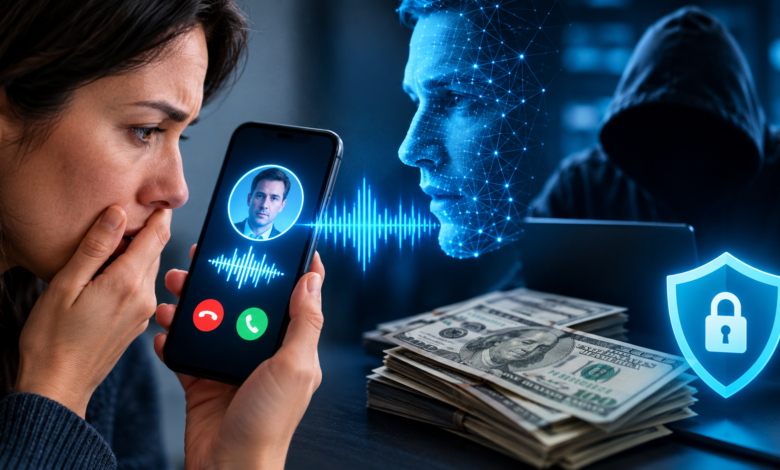
Deepfake scams use artificial intelligence to copy a real person’s voice or face, so a criminal can pretend to be someone you trust and convince you to send money. In 2026 these tools are cheap, fast, and good enough to fool people who believe they are hard to trick.
- What Are Deepfake Scams and How Do They Work?
- The Most Common Deepfake Scams Targeting Your Money
- Why These Scams Work: The Psychology Behind the Panic
- How to Spot a Deepfake: Warning Signs That Still Work
- How to Protect Yourself and Your Family: A Step-by-Step Plan
- What to Do If You Already Sent Money
- How Banks, Regulators, and Tech Companies Are Responding
- Frequently Asked Questions About Deepfake Scams
- Conclusion: Trust the Process, Not the Voice
The good news is that you can defend yourself without any special software. This guide explains how deepfake scams work, which ones go after your money most often, and the simple verification habits that stop nearly all of them.
What Are Deepfake Scams and How Do They Work?
A deepfake is audio, video, or an image created or altered by AI to make it look or sound like a real person said or did something they never did. The word blends “deep learning,” the AI method behind it, and “fake.”
For years, deepfakes were a curiosity, mostly seen in viral videos and entertainment. Today they are a practical tool for fraud. The reason is simple economics: a scam that once needed a skilled actor, a script, and hours of preparation can now be run by one person with a laptop and a short audio clip.
Scammers do not need to fool everyone. They only need to fool a small share of the people they contact. At scale, even a low success rate pays well, which is why these attacks keep growing.
How AI Voice Cloning Works
A voice cloning tool studies a sample of someone’s speech and learns the features that make that voice unique: pitch, accent, rhythm, and the way the person pauses. Once it has learned them, it can generate new speech from typed text, in that voice, in seconds.
Security researchers have shown that some tools can produce a convincing copy from only a few seconds of clear audio. More audio usually means a better clone, but the bar is lower than most people assume.
Where do scammers get the sample? The sources are everywhere:
- Social media videos and stories, including ones posted by relatives.
- Voicemail greetings and recorded messages.
- Podcasts, webinars, and conference talks.
- Short phone calls where you say “hello” and stay on the line.
More advanced tools work live. The scammer speaks into a microphone, and software converts their voice into the target voice in real time. That means the “relative” on the phone can answer your questions, not just read a script.
Clones are not perfect. They tend to struggle with long, unpredictable conversations and unusual emotions. But on a noisy phone line, with a frightened listener and a ticking clock, those small flaws disappear.
How Deepfake Video and Images Work
Video deepfakes use a similar idea. Software maps one person’s face onto another person’s head and syncs the lips to the audio. Some tools now do this live on video calls, so a scammer can appear as a completely different person.
The most widely reported case happened in early 2024. Hong Kong police said an employee at the engineering firm Arup was tricked during a video call with what appeared to be senior executives. The “executives” were deepfakes, and the employee made multiple transfers worth roughly US$25 million.
AI-generated images are also used to create fake IDs, fake receipts, fake invoices, and fake social media profiles. They help criminals pass identity checks, open accounts in someone else’s name, or make a made-up person look real.
The table below shows the main types of deepfakes and how criminals use them.
| Type of deepfake | What is faked | Typical goal | Common example |
|---|---|---|---|
| Voice clone | A relative’s, boss’s, or banker’s voice | Get you to send money by phone | Panicked call from a “grandchild” |
| Live voice changer | A voice converted in real time | Hold a real, two-way conversation | Fake bank fraud agent |
| Face-swap video | A face on a live video call | Approve payments or pass ID checks | Fake executive on a video meeting |
| Synthetic video ad | A celebrity or expert endorsing a product | Drive victims to fake investment sites | Fake “famous investor” advertisement |
| AI images and documents | IDs, receipts, invoices, profile photos | Open accounts, fake proof, build trust | Fake invoice with changed bank details |
Why 2026 Is Different
Three things have changed. First, the tools are cheap and easy to find, so skill is no longer a barrier. Second, real-time cloning lets scammers respond to what you say. Third, data leaks supply real names, addresses, and family details, which make the story sound believable.
The damage is already large. According to the Federal Trade Commission, consumers reported losing more than $12 billion to fraud in 2024, and impersonation scams were among the biggest categories. Real losses are likely higher, because many victims never report.
That does not mean you are helpless. It means the old advice, “if it sounds like them, it is them,” no longer works. You need a better test, and we will build one in this guide.
The Most Common Deepfake Scams Targeting Your Money
Deepfake scams come in many forms, but most follow a small number of scripts. Learn the scripts and you will recognize them even when the voice or face sounds perfect.
The Family Emergency Call
This is the scam that frightens people most. The phone rings, and a voice that sounds exactly like your child or grandchild is crying. They say they were in an accident, or arrested, or kidnapped. They beg you not to tell anyone.
Then a second person takes over, posing as a lawyer, police officer, or kidnapper. They ask for money right now, by bank transfer, cryptocurrency, gift cards, or a courier who will pick up cash.
The script works because it attacks your love for someone, not your logic. You do not stop to ask whether the story makes sense. You only want the crying to stop.
What to do: hang up and call your relative directly on the number you already have. If you cannot reach them, call another family member. Real emergencies survive a two-minute pause. Scams do not.
The Fake Bank or Fraud Department Call
Here the caller claims to be from your bank’s fraud team. Caller ID may show the bank’s real number, because that can be faked easily. The voice is calm and professional, and the agent may already know your name and the last digits of your card.
They tell you your account is under attack and that you must move your money to a “safe account” to protect it. That safe account belongs to the scammer. This is the pattern we describe in our guide on how imposter scams cost consumers billions.
AI adds two things: a more convincing voice and the ability to generate scripts for thousands of calls at once.
What to do: hang up and call the number printed on the back of your card. Your bank will never ask you to move money to protect it.
Fake Celebrity and Expert Investment Videos
You scroll through social media and see a video of a famous businessperson or well-known doctor promoting a new investment platform or product. They say ordinary people can earn guaranteed returns. The video looks real, but it was generated or edited by AI.
The link leads to a professional-looking website. You deposit a small amount, and the dashboard shows impressive profits. You deposit more. When you try to withdraw, you are asked to pay “fees” or “taxes” first, and the money never comes out.
What to do: treat any celebrity investment ad as fake unless you can verify it on the person’s official channels. No legitimate investment guarantees returns.
The Deepfake Boss and Payment Fraud at Work
In this version, an employee receives a message or call from someone who appears to be the CEO or a senior manager. The request is urgent and confidential: pay a new supplier today, buy gift cards for a client, or move funds for a secret deal.
Some attacks combine email with a follow-up voice call or video meeting. That extra step makes the request feel verified. The Arup case showed that even a video call with several “colleagues” can be fake.
Small businesses are at particular risk because they have fewer approval steps. One bookkeeper with access to the bank account can become the single point of failure.
What to do: require a second approval for any new payee or changed bank details, and confirm the request through a different channel, such as a call to a number you already know.
Romance Scams and Fake Video Chats
Romance scammers used to avoid video calls, which exposed them. Now some use face-swap tools to appear on camera as the attractive person in their profile photos. A short video call “proves” the person is real.
Over weeks or months, they build trust. Then comes an emergency, an investment opportunity, or a request for help with a visa or medical bill. The money goes to the scammer, and the relationship disappears.
What to do: never send money to someone you have not met in person, no matter how real the video looks.
Fake Identity Checks and Synthetic Identities
Criminals also use deepfake selfies and AI-generated documents to get past identity checks. They may open new accounts in your name, take over an existing account, or build a “synthetic identity” that mixes real and fake data.
You may never receive a phone call. The first sign is a surprise bill, a credit card you never opened, or a loan rejection you cannot explain.
What to do: monitor your credit reports and consider a credit freeze, which we cover in the protection plan below.
The table below summarizes the scripts, so you can compare them at a glance.
| Scam | How it works | Typical request | Best response |
|---|---|---|---|
| Family emergency | Cloned voice of a relative in distress | Urgent bail, hospital, or ransom money | Hang up, call the relative directly |
| Fake bank fraud team | Spoofed number and AI voice | Move money to a “safe account” | Hang up, call the number on your card |
| Celebrity investment video | Deepfake endorsement on social media | Deposit money on a fake platform | Verify on official channels, avoid |
| Deepfake boss | Fake executive by call, message, or video | Urgent payment to a new account | Confirm through a second channel |
| Romance scam | Face-swapped video chats | Money for an emergency or investment | Never send money to someone unmet |
| Synthetic identity | Fake selfies and documents | None, the fraud is done in your name | Freeze credit, watch your reports |
Why These Scams Work: The Psychology Behind the Panic
It is tempting to think only careless people fall for deepfake scams. The evidence points the other way. Scammers target everyone, and the people who lose money are often careful, educated, and cautious in other parts of life.
Urgency, Fear, and Authority
Almost every scam uses the same three levers. Urgency says you must act now. Fear says something terrible will happen if you do not. Authority says the caller is a bank, a police officer, or your boss, so you should obey.
When those three levers are pulled together, the thinking part of your brain slows down. You stop asking questions and start following instructions. Scammers know this, and they design scripts to keep you in that state.
A cloned voice adds a fourth lever: familiarity. Your brain is wired to trust voices it knows. When the voice sounds right, doubts fade.
Why Smart People Still Fall for It
Intelligence does not protect you from stress. A parent who hears their child crying is not weighing evidence. They are responding to an alarm. The same is true for an employee who thinks a request came from the CEO.
Scammers also use isolation. They tell you not to hang up, not to tell anyone, and not to contact the bank. That instruction is a red flag in itself. Real emergencies allow you to call other people. Scams do not.
The most useful mindset is this: the more perfect the story feels, the more you should verify it. A scammer’s script is designed to remove every reason to doubt.
Why Fast and Irreversible Payments Make It Worse
Scammers also choose payment methods that cannot be undone. That is why they ask for gift cards, crypto, wires, or cash couriers instead of credit cards. Our guide to instant payments explains why real-time transfers are final, which makes them attractive to criminals.
The table below shows how recoverable each method tends to be, and why scammers prefer some of them.
| Payment method | Chance of getting money back | Why scammers like it |
|---|---|---|
| Credit card | Good, through disputes and chargebacks | They avoid it because it is reversible |
| Debit card | Moderate, depends on the situation | Less common in scams |
| Wire transfer | Low, unless reported within hours | Fast and hard to reverse |
| Instant bank transfer or Zelle-style app | Low, payments are treated as final | Money moves in seconds |
| Cryptocurrency | Very low | Hard to trace and reverse |
| Gift cards | Very low | Easy to drain and hard to trace |
| Cash courier | Almost none | No bank record, no recall |
Here is a useful rule: if a stranger asks you to pay by gift card, crypto, wire, or cash, assume it is a scam. Legitimate banks, governments, and companies do not demand those methods.
How to Spot a Deepfake: Warning Signs That Still Work
Here is an honest warning first. Spotting a deepfake by ear or by eye is getting harder every year. Tips like “look for weird blinking” helped in the past, but newer tools fix many of those flaws. Do not rely on your senses alone.
The most reliable warning signs are not technical. They are about how the request is made. A perfect voice can still ask for something no real person or bank would ever ask for.
Audio Red Flags
Some voice clones still leave clues, especially in longer calls. Listen for these signs, but treat them as a bonus, not a test:
- Unnatural pacing. Odd pauses, even rhythm, or a flat tone in a moment of supposed panic.
- Strange breathing or background. Either too clean, like a studio, or looped noise that does not change.
- Avoiding detail. The “relative” answers questions vaguely and will not discuss shared memories.
- A bad line used as cover. Static, a poor connection, or crying that hides small glitches.
If the voice passes all these checks, that proves nothing. A good clone on a good line can sound perfect.
Video Red Flags
On video calls, look for a few visual clues, especially when the person moves:
- Face edges that blur when the head turns, or hair and glasses that look unstable.
- Lip movements that slightly miss the words.
- Lighting that does not match between the face and the room.
- A refusal to do a simple action, such as turning sideways, waving a hand in front of the face, or holding up an object.
That last test can be useful on live calls, because many face-swap tools struggle when something blocks the face. But again, it is only one signal.
Behavioral Red Flags: The Ones You Can Trust
The most dependable signs come from the situation, not the media. Be suspicious when you see any of these:
- Pressure to act immediately, with no time to think or call anyone.
- A demand for secrecy, such as “do not tell Mom” or “do not call the bank.”
- An unusual payment method, like gift cards, crypto, wire transfers, or a cash courier.
- A request that breaks normal process, like an executive asking for a payment outside the usual approval.
- A change of channel, such as moving from email to a private chat app.
The table below summarizes how much you can trust each type of signal.
| Signal | What to look for | How reliable? | What to do |
|---|---|---|---|
| Voice quality | Odd pacing, flat tone, looped noise | Low, clones keep improving | Do not rely on it |
| Video glitches | Blurry edges, lip-sync errors | Low to medium | Ask for a simple action on camera |
| Pressure and urgency | “Act now, do not tell anyone” | High | Stop, hang up, verify |
| Unusual payment method | Gift cards, crypto, wire, cash | High | Refuse the payment |
| Process break | Request skips normal approvals | High | Confirm through a known channel |
| Caller ID | Shows a familiar number | Low, it can be spoofed | Never trust it alone |
The lesson is simple: do not ask, “Is this voice real?” Ask, “Would this person really ask me to do this, this way?”
How to Protect Yourself and Your Family: A Step-by-Step Plan
You cannot stop scammers from trying. But you can make yourself a much harder target. The steps below take a few hours in total, and most of them need no technical skill.
- Agree on a family safe word. Choose a word or phrase that only your family knows, and use it to confirm identity in any emergency call.
- Use the call-back rule. If anyone asks for money or personal information, hang up and call back using a number you already trust.
- Verify through a second channel. If a message claims to be from your boss or relative, confirm by a different method, such as a call or a text to a known number.
- Slow every money request down. Give yourself at least ten minutes and talk to someone before sending anything.
- Reduce public audio and video. Make social accounts private, and think twice before posting long videos of family members.
- Secure your accounts. Use passkeys or app-based two-factor authentication, not text codes alone.
- Freeze your credit. A free credit freeze makes it much harder for someone to open new accounts in your name.
- Set bank limits and alerts. Lower transfer limits and turn on notifications for every outgoing payment.
Create a Family Safe Word
A safe word is the simplest and most effective defense against voice cloning. It costs nothing, and it works because a scammer cannot guess it.
Choose something that is easy to remember but impossible to find online. Avoid pet names, birthdays, or anything that appears on social media. A random phrase, like “blue umbrella pancakes,” works better than a meaningful word.
Agree on three rules:
- Use it in any emergency call that asks for money or secrecy.
- Never say it first. Ask the caller for it, and do not give hints.
- Change it if you think someone may have heard it.
If the caller cannot give the safe word, hang up and call back. Practice once with older relatives, so it feels natural during a real scare.
Set Up Protection at Work and in Your Small Business
If you handle company money, one habit prevents most deepfake payment fraud: no payment is approved on the strength of a single call, message, or video meeting.
Put these rules in writing:
- Require two people to approve any new payee or changed bank detail.
- Confirm unusual requests by calling a number from your own records, not the one in the message.
- Set a cooling-off period for large or urgent payments.
- Train staff with short, realistic examples so they know what an attack looks like.
The key point is that the rule must apply to everyone, including the CEO. Scammers rely on staff feeling too nervous to question a senior person.
Lock Down Your Digital Footprint
You cannot remove every recording of your voice, but you can reduce what is easy to find.
- Review privacy settings on social media and limit who can see videos.
- Change your voicemail greeting to a generic message that does not use your voice.
- Be careful with unknown callers. If someone asks “Can you hear me?” do not answer “yes,” and hang up.
- Remove old accounts and check what data brokers publish about you.
Also be careful with voice authentication. Some banks and services have offered voice ID as a login method. Cloned voices make that approach weak, so choose stronger options when you can. Our guide on passkeys and your bank account explains a safer alternative.
Consider a Credit Freeze and Monitoring
A credit freeze blocks lenders from viewing your credit file, which makes it hard for criminals to open accounts in your name. In the US, you can place and lift a freeze for free with each of the three main credit bureaus. You will need to unfreeze temporarily when you apply for credit yourself.
Also check your credit reports regularly. In the US you can request free reports through the official site AnnualCreditReport.com. Look for accounts or inquiries you do not recognize.
The table below turns the plan into a checklist with time estimates.
| Action | Time needed | Cost | Protection against |
|---|---|---|---|
| Agree on a family safe word | 10 minutes | Free | Voice clone emergency calls |
| Use the call-back rule | Habit | Free | Fake bank and fake boss calls |
| Make social media private | 20 minutes | Free | Voice and video sample collection |
| Turn on passkeys or app-based 2FA | 15 minutes | Free | Account takeover |
| Place a credit freeze | 30 minutes | Free | Synthetic and stolen identity fraud |
| Lower transfer limits and set alerts | 10 minutes | Free | Large instant payment losses |
| Add a second approval at work | 1 hour | Free | Deepfake boss fraud |
What to Do If You Already Sent Money
If you realize you have been scammed, do not blame yourself. These scams are designed by professionals to beat careful people. What matters now is speed. In many cases, the first hours decide whether any money can be recovered.
The First Hour: Act Fast
- Call your bank immediately. Use the number on your card. Say you were the victim of fraud, and ask whether the payment can be recalled or frozen.
- Contact the payment provider. If you used a payment app, wire service, crypto exchange, or gift card company, report it there too.
- Stop all contact with the scammer, but save messages, phone numbers, account details, and screenshots.
- Change passwords and secure your accounts, especially if you shared codes or login details.
- Place a credit freeze if you shared personal information.
Wire transfers and instant payments are time-sensitive. A bank may have a chance to contact the receiving bank before the money is moved again. Every hour you wait reduces the chance.
Report the Scam
Reporting helps in two ways. It may support your own case, and it helps investigators spot patterns. In the US, these are the main places to report:
| Where to report | What it covers | Website |
|---|---|---|
| Your bank or card issuer | Recall attempts, disputes, account security | Call the number on your card |
| Federal Trade Commission | General fraud and impersonation | ReportFraud.ftc.gov |
| FBI Internet Crime Complaint Center | Online and cyber-enabled fraud | IC3.gov |
| IdentityTheft.gov | Identity theft recovery plan | IdentityTheft.gov |
| Local police | Police report, often needed by banks | Your local department |
If you are outside the US, contact your national consumer protection agency and your bank. Many countries have a dedicated fraud reporting service.
Watch Out for Recovery Scams
After a scam, you may be contacted by someone offering to recover your money for a fee. This is often a second scam. They find victims through leaked lists and social media posts.
Be suspicious of anyone who:
- Asks for an upfront fee to recover lost funds.
- Claims to be a government agency and asks for payment.
- Guarantees a full refund.
Official agencies do not charge you to help recover stolen money. Only use contact details you find yourself, not ones sent to you.
How Banks, Regulators, and Tech Companies Are Responding
The fight against deepfake fraud is not only on your shoulders. Banks, regulators, and technology companies are responding, though progress is uneven.
What Banks Are Doing
Many banks are adding behavioral checks, which analyze how you normally use your account, rather than relying only on a voice or password. They are also adding warnings when you send money to a new payee, and some are slowing or reviewing unusual high-value transfers.
Some banks are moving away from voice authentication because cloning has made it less secure. Expect more use of passkeys, device checks, and biometric methods that are harder to fake. If you want to understand where this is going, see our article on biometric payments.
What Regulators Are Doing
Governments are starting to treat AI-enabled fraud as its own problem. In early 2024, the Federal Communications Commission ruled that AI-generated voices in robocalls count as “artificial” under US telemarketing law, which makes many such calls illegal. The Federal Trade Commission also introduced a rule targeting the impersonation of businesses and government agencies.
Other countries have gone further on reimbursement. As noted in our guide to instant payments, the United Kingdom requires reimbursement for many push payment scams, up to a cap. The US has no matching nationwide rule, so prevention remains your best protection.
What Tech Companies Are Doing
Platforms are experimenting with labels for AI-generated content, detection tools, and content provenance standards such as C2PA, which attach information about how a file was made. Phone carriers are improving spam filtering and caller verification.
These tools help, but none of them is complete. Detection tools can miss new methods, and labels can be removed. That is why personal habits still matter most.
| Group | Main response | Strength | Limitation |
|---|---|---|---|
| Banks | Behavioral checks, payee warnings | Can stop payments before they leave | Uneven across banks |
| Regulators | Rules on AI robocalls and impersonation | Gives enforcement tools | Slow, cannot stop foreign scammers |
| Platforms | Labels and detection | Helps flag fake ads and videos | Easy to evade, incomplete |
| Phone carriers | Spam filters, caller verification | Blocks many scam calls | Spoofing still gets through |
| You | Verification habits | Works against every tool | Needs consistency |
Frequently Asked Questions About Deepfake Scams
How much audio does a scammer need to clone my voice?
Some tools can produce a recognizable copy from only a few seconds of clear audio, though more audio gives a better result. Social media videos, voicemail greetings, and recorded calls are common sources. You cannot hide completely, which is why verification habits matter more than secrecy.
Can I tell if a call is a deepfake?
Not reliably. Some clones have small flaws, but good ones can sound perfect. The better test is behavioral: pressure, secrecy, and unusual payment requests are strong warning signs. When in doubt, hang up and call back using a number you already know.
What should a family safe word look like?
Choose a random, memorable phrase that does not appear anywhere online. Avoid birthdays, pet names, and social media details. Make sure every family member knows it, and ask the caller to say it first.
Are deepfake scams illegal?
Yes. Using a cloned voice or fake identity to obtain money is fraud and, in many places, also breaks laws on impersonation and telecommunications. The challenge is that many scammers operate across borders, which makes them hard to catch.
Can banks still use voice authentication safely?
It is becoming a weaker option. Because voices can be cloned, security experts recommend stronger methods such as passkeys, device-based checks, and app-based approval. If your bank offers voice ID, ask whether you can switch to another method.
Will my bank refund money lost to a deepfake scam?
It depends on the situation and the country. If someone makes a transfer without your authorization, you generally have stronger protection. If you sent the money yourself under deception, refunds are far less certain in the US. Report the fraud immediately and ask your bank what options apply.
Should I stop posting videos online?
You do not need to disappear. But make accounts private where you can, avoid posting long videos of children and elderly relatives, and remove old content you no longer need. Combine that with a safe word and a call-back habit.
Conclusion: Trust the Process, Not the Voice
Deepfake scams work because they attack something deeply human: our trust in the voices and faces we know. That trust is not a weakness, but it is no longer enough on its own.
The good news is that the best defenses are simple and free. Agree on a family safe word. Hang up and call back on a number you trust. Refuse unusual payment methods. Add a second approval at work. Freeze your credit. Set limits and alerts on your bank accounts.
If you remember one idea, make it this: a perfect voice proves nothing, but a verified call proves a lot. Take a few minutes this week to talk to your family, set up your safe word, and tighten your account settings. That small effort can protect years of savings.
This article is for general information only and is not financial, legal, or tax advice. Laws, reporting channels, and bank policies change, so confirm details with your bank and official agencies before you act.