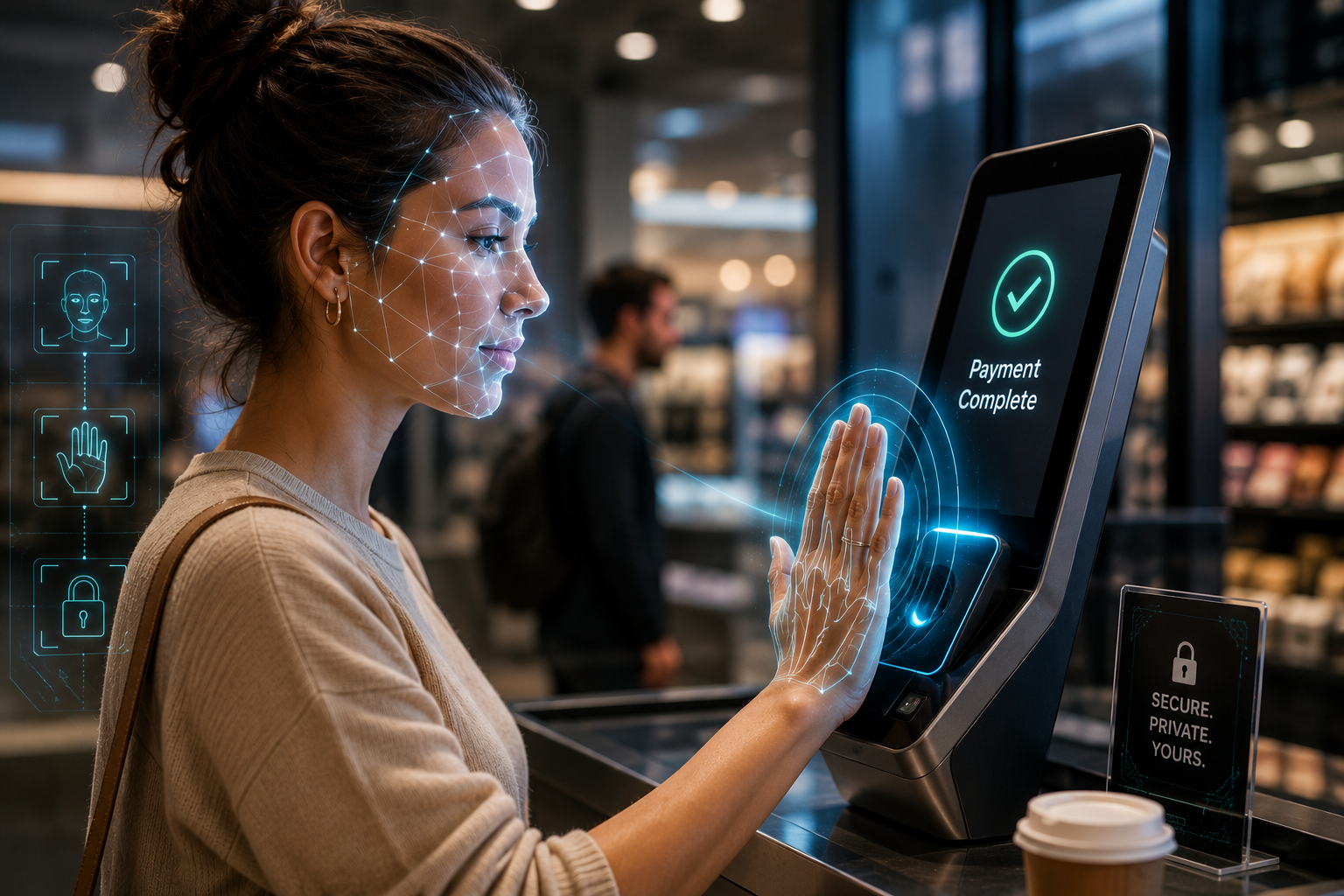



Somewhere right now, encrypted financial data is being copied and stored by people who cannot yet read a single byte of it. Not because the theft failed, but because it hasn’t needed to succeed yet. The strategy has a name inside cybersecurity circles: “harvest now, decrypt later.” The idea is simple and unsettling — steal encrypted data today, even though it’s completely unreadable with current technology, and simply wait for a future computer powerful enough to crack it open. For most kinds of stolen data, that wait would be pointless; by the time anyone could break the encryption, the information would be stale. But for certain categories of financial data — Social Security numbers, account credentials, long-term financial records, the cryptographic keys protecting entire banking systems — the information stays valuable for years or decades, which is exactly long enough for a sufficiently powerful quantum computer to eventually arrive and make the wait worthwhile.
- What Quantum Computing Actually Is, Without the Jargon
- Why Your Money Depends on Math Problems Being Hard
- What “Q-Day” Means and When It Might Arrive
- Harvest Now, Decrypt Later: The Threat That’s Already Happening
- What’s Actually at Risk in the Financial System
- Table: Classical Computing vs. Quantum Computing in Finance
- Cryptocurrency’s Unique Quantum Problem
- What Banks, Regulators, and Governments Are Already Doing
- Post-Quantum Cryptography: The Fix Already Being Built
- The Other Side of the Story: Quantum Computing as a Financial Tool, Not Just a Threat
- What This Has in Common With Other Fintech Risks You Already Know About
- What You Can Actually Do About It Today
- A Practical Checklist
- Frequently Asked Questions
- The Bottom Line
- Sources
This isn’t science fiction, and it isn’t a problem for some distant future generation to solve. It’s a live, actively discussed risk inside central banks, financial regulators, and major banking institutions right now, in 2026 — even though the specific quantum computer capable of breaking today’s encryption doesn’t exist yet. This article explains, in plain language, what quantum computing actually threatens in the financial system, how close that threat really is, what’s already being done to prepare, and — most importantly — what, if anything, an everyday person needs to actually do about it today.
What Quantum Computing Actually Is, Without the Jargon
Every computer you’ve ever used — your phone, your laptop, the servers running your bank’s app — processes information as bits, tiny switches that are either on or off, a 1 or a 0. Every calculation, no matter how complex, ultimately reduces to enormous numbers of these simple on/off decisions happening extremely fast.
Quantum computers work on a fundamentally different principle. Instead of bits, they use qubits, which — thanks to a property of quantum physics called superposition — can represent a combination of both 1 and 0 at the same time, rather than being locked into one state or the other. When qubits are linked together through another quantum property called entanglement, a quantum computer can explore an enormous number of possible answers to certain types of problems simultaneously, instead of checking them one at a time the way a classical computer must.
This doesn’t make quantum computers faster at everything — for most everyday tasks, a classical computer is just as good or better. What it does make them extraordinarily good at is a specific category of problem: finding patterns and factors within very large numbers. And that specific category of problem happens to be the exact mathematical foundation that modern encryption is built on, which is precisely why the financial industry is paying such close attention to a technology that, for most other purposes, remains years away from everyday relevance.
Why Your Money Depends on Math Problems Being Hard
Nearly every secure digital transaction you make — logging into your banking app, sending money through a payment platform, connecting your accounts through an open banking API — relies on a category of encryption called public-key cryptography. The security of this system doesn’t come from hiding a formula; the formula is public and well understood. It comes from the fact that certain math problems, like factoring an extremely large number into its prime components, are so computationally difficult that even the fastest classical supercomputers on Earth would need longer than the age of the universe to solve them by brute force.
That difficulty is the entire security model. It’s not that the encryption is unbreakable in a theoretical sense — it’s that breaking it with classical computers is practically impossible within any meaningful timeframe. A sufficiently powerful quantum computer changes that equation entirely. A mathematical technique called Shor’s algorithm, first described by mathematician Peter Shor in 1994, demonstrated that a large-scale, error-corrected quantum computer could solve exactly this type of factoring problem dramatically faster than any classical computer — turning a problem that would take longer than the universe has existed into one that could, in theory, be solved in hours or days.
This is why quantum computing isn’t just another incremental tech upgrade for the financial industry to casually adopt over time. It represents a potential, eventual breaking point for the entire mathematical foundation that online banking, card payments, and digital financial identity have been built on for the past several decades.
What “Q-Day” Means and When It Might Arrive
Inside cybersecurity and financial-infrastructure circles, the hypothetical moment a quantum computer becomes powerful enough to break current encryption standards has a shorthand name: Q-Day. It’s treated less like a specific date on a calendar and more like a risk threshold that could be crossed with relatively little public warning, since a government or organization that achieved this capability first would have significant incentive to keep it quiet rather than announce it.
Current quantum computers, even the most advanced ones built by major technology companies, remain far short of the scale needed to actually break widely used encryption standards today. The machines that exist now are described as “noisy intermediate-scale quantum” devices — powerful enough for narrow research applications, but not yet capable of the millions of stable, error-corrected qubits that most experts believe would be needed to run Shor’s algorithm against real-world encryption at scale.
Estimates for when that threshold might actually be reached vary considerably among experts, ranging from roughly five years to well over a decade, and some researchers remain skeptical it will happen on any predictable near-term timeline at all given the immense engineering challenges involved in quantum error correction. But here’s the detail that turns this from an abstract future problem into a present one: financial institutions, governments, and standards bodies aren’t waiting for certainty. They’re treating the possibility of a five-to-ten-year timeline as the operating assumption, because of exactly the “harvest now, decrypt later” dynamic covered next.
Harvest Now, Decrypt Later: The Threat That’s Already Happening
This is the part of the quantum computing story that makes it relevant today rather than purely theoretical, and it’s the reason financial regulators have already started acting years before any quantum computer capable of breaking encryption is believed to exist.
Encrypted data intercepted or stolen today — through a data breach, a compromised network, or state-level surveillance — doesn’t need to be readable right now to be valuable to whoever stole it. If that data remains sensitive for years, an attacker can simply store it, encrypted and unreadable, and wait. Once a sufficiently powerful quantum computer eventually exists, previously stolen encrypted data could be decrypted retroactively, exposing information its owners believed had been permanently protected.
For most stolen data, this strategy wouldn’t be worth the wait — a stolen shopping cart or an expired login session isn’t valuable a decade later. But for the financial sector specifically, huge categories of data remain sensitive for exactly that long or longer: government identification numbers, long-term account and transaction histories, mortgage and loan records, trust and estate documents, and the cryptographic keys and certificates that underpin core banking infrastructure. This is the specific reason national security agencies and major financial regulators in the US, EU, and elsewhere have already issued formal guidance urging organizations to begin migrating to quantum-resistant encryption now, years before the quantum computer that would exploit the old encryption is believed to exist — because for this category of threat, waiting until Q-Day actually arrives to start responding would already be too late for anything harvested in the meantime.
What’s Actually at Risk in the Financial System
It’s worth being specific about what quantum computing threatens, because the risk isn’t evenly distributed across every part of modern finance.
Transaction encryption and secure banking sessions. The encryption protecting your login session, your card transactions, and the communication between your banking app and its servers relies on the same public-key cryptography described above, making it directly exposed to a future quantum-capable attack if not upgraded in time.
Digital signatures and identity verification. Digital certificates that verify a website or banking app is legitimately who it claims to be — the padlock icon in your browser — depend on the same underlying cryptographic assumptions, meaning a broken encryption standard could theoretically allow sophisticated attackers to forge seemingly legitimate financial websites or communications.
Long-term stored financial records. Data that needs to remain confidential for decades — estate planning documents, long-term investment records, insurance and pension data — carries the highest exposure to the “harvest now, decrypt later” scenario described above, precisely because of how long it needs to stay protected.
Interbank and settlement infrastructure. The cryptographic systems underpinning the messaging and settlement networks that move money between banks globally represent one of the highest-stakes categories of risk, given the sheer scale and centrality of that infrastructure to the entire financial system — which is exactly why bodies like the Bank for International Settlements have prioritized this area in their quantum-readiness research.
Cryptocurrency and blockchain systems, which carry a distinct and in some ways more urgent version of this risk, covered in detail in its own section below.
What’s notably not on this list, at least not directly: your day-to-day spending, the balance in your checking account, or your credit score. Quantum computing doesn’t threaten to “steal your money” directly in the way a phishing scam or a stolen card does. The risk is structural — it threatens the cryptographic trust layer that the entire system relies on, which is a slower-moving but potentially much larger-scale category of risk if left unaddressed.
Table: Classical Computing vs. Quantum Computing in Finance
| Factor | Classical Computing | Quantum Computing |
|---|---|---|
| Basic unit of information | Bit (0 or 1) | Qubit (superposition of 0 and 1) |
| Current maturity for banking use | Fully mature, universal infrastructure | Early-stage, narrow research and pilot use |
| Ability to break current encryption | Practically impossible within any useful timeframe | Theoretically possible once large-scale, error-corrected machines exist |
| Primary near-term financial application | All existing banking, payments, and data infrastructure | Portfolio optimization, risk modeling, fraud-pattern research (experimental) |
| Timeline for mainstream relevance | Already the entire foundation of finance | Encryption risk timeline uncertain; estimates range roughly 5–10+ years |
| What institutions are doing now | Maintaining and gradually upgrading existing systems | Piloting post-quantum cryptography migration well ahead of need |
Cryptocurrency’s Unique Quantum Problem
Cryptocurrency and blockchain systems face a version of the quantum threat that’s both more direct and, in some ways, structurally harder to fix than traditional banking infrastructure.
Most cryptocurrencies, including Bitcoin and Ethereum, rely on a form of public-key cryptography called elliptic curve cryptography to secure wallets and validate transactions — a system that, like the encryption protecting your bank login, is theoretically vulnerable to a sufficiently powerful quantum computer running Shor’s algorithm. The specific concern for crypto isn’t just future transactions; it’s that public wallet addresses, and in some cases exposed public keys from past transactions, are permanently visible on the blockchain by design. A quantum computer capable of deriving a private key from an exposed public key could, in theory, directly access funds in vulnerable wallets — without needing to “steal” anything in the traditional sense, since the mathematical relationship between public and private keys is exactly the trust guarantee quantum computing threatens to undermine.
This connects directly to the broader shift covered in our earlier piece on tokenized real-world assets: as more traditional assets — property, bonds, and savings instruments — move onto blockchain-based infrastructure, the quantum-security question stops being a niche crypto concern and becomes a mainstream financial infrastructure question, since the same cryptographic assumptions increasingly underpin both worlds. Several major blockchain networks and research groups have already begun developing and testing quantum-resistant signature schemes and migration paths, but coordinating an upgrade across a decentralized network with no single point of authority is a materially harder problem than upgrading a centralized bank’s internal systems, which is part of why crypto-specific quantum risk tends to draw disproportionate attention relative to its current, still-theoretical status.
What Banks, Regulators, and Governments Are Already Doing
Despite the uncertainty around exactly when a quantum computer capable of breaking encryption might arrive, the response from financial infrastructure and regulatory bodies has been notably proactive rather than reactive.
The US National Institute of Standards and Technology (NIST) completed a multi-year, international process to select and formally standardize a new generation of quantum-resistant encryption algorithms, publishing its first finalized post-quantum cryptography standards, with financial institutions among the priority sectors expected to migrate. Major global banks have begun running internal pilots testing these new quantum-resistant standards on portions of their infrastructure, while central banks and the Bank for International Settlements have published extensive guidance treating quantum-readiness as a core component of long-term financial infrastructure resilience planning, alongside more familiar priorities like cybersecurity and operational risk.
Card networks and payment processors have similarly begun quiet, gradual infrastructure work to ensure future compatibility with post-quantum encryption standards, following a pattern the industry has used before with prior major encryption transitions — planning and migrating years ahead of an actual forcing event, rather than waiting for one. None of this work is complete, and full migration across the enormous, interconnected web of global financial infrastructure is expected to take years, precisely because so many different systems, institutions, and countries need to move in a coordinated way for the transition to actually close the security gap rather than leaving weak links in the chain.
Post-Quantum Cryptography: The Fix Already Being Built
The reassuring counterpart to this entire story is that the cybersecurity and cryptography research community has been actively preparing for this exact scenario for well over a decade, and the resulting field — post-quantum cryptography, sometimes shortened to PQC — is not a hypothetical future solution. It’s a maturing, standardized, and increasingly deployed set of technologies right now.
Post-quantum cryptography doesn’t rely on quantum computers itself; instead, it uses entirely different mathematical problems — based on structures like lattices and hash functions — that are believed to remain difficult for both classical and quantum computers to solve, unlike the factoring-based problems that Shor’s algorithm specifically targets. Because these new algorithms are designed to run on today’s ordinary computers and network infrastructure, the migration path doesn’t require financial institutions to wait for or acquire quantum hardware themselves — it requires updating software, protocols, and certificates to use the new quantum-resistant mathematical approach instead of the older one, which is a large but fundamentally manageable engineering project rather than a wholesale infrastructure replacement.
The practical implication for the average consumer is genuinely encouraging: this isn’t a race the financial industry is currently losing, or one where individual consumers are being left to fend for themselves. It’s an infrastructure upgrade happening largely behind the scenes, similar in spirit to how banks and payment networks upgraded from older, weaker encryption standards to stronger ones in past decades, mostly invisible to the end user beyond the reassurance that it’s happening.
The Other Side of the Story: Quantum Computing as a Financial Tool, Not Just a Threat
It’s worth balancing the security-risk framing of this article with the other half of the quantum computing story, because the same technology threatening current encryption is also being actively researched as a powerful tool for the financial industry itself.
Major banks and financial research institutions have been experimenting with quantum computing for portfolio optimization, since quantum algorithms show early promise for solving certain complex allocation and risk-balancing problems more efficiently than classical methods once the hardware matures. Derivatives pricing and Monte Carlo-style risk simulations — calculations that currently require enormous classical computing resources to model probabilistic financial outcomes — are another area where quantum approaches are being actively researched for eventual, substantial efficiency gains. Fraud detection and credit-risk modeling represent a third area of active research interest, since quantum-enhanced machine learning techniques may eventually help identify complex fraud patterns that classical systems struggle to detect efficiently at scale.
None of these applications are in mainstream production use yet, and most remain in the research and limited-pilot stage. But it’s a useful reminder that quantum computing isn’t a purely adversarial technology aimed at breaking financial security — it’s a general-purpose computational leap that happens to have one specific, serious security implication for existing cryptography, alongside a range of other potential benefits the financial industry is actively working to capture.
What This Has in Common With Other Fintech Risks You Already Know About
The quantum computing threat fits into a broader pattern readers of this site will recognize from other emerging fintech risks: a genuinely useful, rapidly advancing technology creates both new capability and new exposure at the same time, and the responsible path forward is neither blind adoption nor blanket avoidance, but informed, proactive preparation.
It shares clear structural similarities with the dynamic covered in our piece on AI-powered financial scams and deepfake fraud: in both cases, an advancing technology threatens to undermine a security assumption — “recognizing a voice proves identity,” “factoring large numbers is practically impossible” — that the entire financial trust system has quietly depended on for years, and in both cases the effective response has been institutions and standards bodies building new verification layers ahead of the threat becoming fully realized, rather than waiting to react after the fact.
It also connects to the broader trend covered in our article on AI agents beginning to handle payments on people’s behalf: as more of the financial system becomes automated, interconnected, and dependent on continuous, machine-to-machine cryptographic trust through systems like open banking APIs, the underlying cryptographic foundation those systems rely on becomes proportionally more important to protect — which is exactly why quantum-readiness has become a genuine institutional priority now, even while the specific quantum threat it’s preparing for remains, for the moment, still on the horizon.
What You Can Actually Do About It Today
Here’s the section most readers actually want, and the honest answer is refreshingly simple: for the average person, there is very little direct action required right now, and that’s by design rather than an oversight. Quantum-readiness for encryption is fundamentally an infrastructure-level responsibility that sits with banks, payment networks, and technology providers — not something an individual consumer can meaningfully patch on their own end.
That said, a handful of genuinely useful habits apply, partly because they’re good practice regardless of the quantum timeline, and partly because they directly reduce your exposure to the “harvest now, decrypt later” scenario specifically.
Use financial institutions that are transparent about security investment. Banks and platforms that publicly discuss cybersecurity infrastructure investment, security certifications, and modernization efforts are generally the same institutions taking quantum-readiness seriously as part of their broader security posture, even if they don’t market it explicitly using the term “post-quantum.”
Minimize how much sensitive financial data sits in old, inactive accounts and services. Every account holding sensitive financial data — an old brokerage account, a dormant banking app, an unused financial planning service — represents another potential target for the “harvest now” half of the equation, since data doesn’t need to be actively used to be stolen and stored for a future decryption attempt.
Keep software, apps, and devices updated. Security and encryption upgrades, including future quantum-resistant standards, get delivered to consumers primarily through routine software updates, so staying current on updates for your banking apps, browsers, and devices is genuinely the most direct way an individual benefits from institutional quantum-readiness work as it rolls out.
Ask your bank or brokerage directly, if quantum-security matters to you. Increasingly, security-conscious consumers can and do ask financial institutions about their quantum-readiness timeline and post-quantum migration plans directly, and institutions taking the issue seriously generally have a clear, prepared answer.
Treat this as a long-horizon consideration for long-horizon assets specifically. If you’re managing assets or documents that need to remain confidential for decades — trusts, estate plans, long-term investment structures — it’s reasonable to factor institutional quantum-readiness into your evaluation criteria, the same way you’d evaluate any other long-term custodial security practice.
A Practical Checklist
- Recognize this as an infrastructure-level issue, not a personal-action-required emergency — most of the work happens at the institutional level.
- Favor financial institutions that are transparent and proactive about cybersecurity and modernization investment.
- Close or consolidate old, inactive financial accounts holding sensitive data you no longer need accessible.
- Keep banking apps, browsers, and devices updated to receive security upgrades as they roll out.
- If you hold cryptocurrency, follow updates from your specific network regarding post-quantum migration plans.
- For long-horizon assets — trusts, estate planning, multi-decade investment structures — ask your institution directly about quantum-readiness as part of standard due diligence.
- Stay generally informed rather than anxious; this is a multi-year infrastructure transition already underway, not an imminent, unaddressed emergency.
Frequently Asked Questions
Can quantum computers break bank encryption today? No. Current quantum computers remain far short of the scale and error-correction needed to break the encryption protecting banking and financial systems today. The concern is about a future capability, not a present one.
What does “Q-Day” actually mean? Q-Day is the informal term for the hypothetical point at which a quantum computer becomes powerful enough to break widely used current encryption standards. It isn’t a scheduled or predictable date — it’s a capability threshold that experts estimate could be reached anywhere from roughly five years to well over a decade from now, with meaningful uncertainty either way.
Is “harvest now, decrypt later” actually happening, or is it theoretical? Security agencies and researchers have documented evidence consistent with large-scale encrypted data collection and storage by sophisticated threat actors, and multiple national cybersecurity agencies have issued formal warnings treating this as an active, ongoing risk rather than a purely theoretical scenario, which is exactly why quantum-resistant migration is being prioritized now rather than later.
Should I stop using online banking because of this risk? No. Online banking remains dramatically safer than the practical alternatives, and financial institutions are already actively migrating toward quantum-resistant encryption well ahead of any realistic threat timeline. This is a reason for institutional preparedness, not personal avoidance of digital banking.
Is cryptocurrency more at risk from quantum computing than traditional banking? In some specific technical respects, yes — particularly around exposed public keys on public blockchains — which is why quantum-resistant migration in the crypto space has drawn significant research attention, even though, like traditional banking, no current quantum computer is capable of exploiting this risk yet.
What is post-quantum cryptography, in simple terms? It’s a new generation of encryption methods, already formally standardized, built on different mathematical foundations that are believed to remain secure against both classical and quantum computers, designed to run on today’s existing hardware and networks rather than requiring quantum computers themselves.
Will I need to do anything when my bank upgrades its encryption? In almost all cases, no. Encryption upgrades of this kind are typically handled entirely on the institution’s side and delivered transparently through normal software and app updates, the same way past major security upgrades have been.
The Bottom Line
Quantum computing’s threat to financial encryption is real, taken seriously at the highest levels of banking and financial regulation, and still, as of today, a future risk rather than a present one. The gap between those two facts — genuinely serious, but not yet actionable in the present tense — is exactly why the appropriate response has been years of quiet, methodical infrastructure preparation rather than public alarm, and it’s why the appropriate individual response looks less like anxiety and more like the same handful of good financial-security habits that make sense regardless of the quantum timeline: choosing security-conscious institutions, closing unused accounts holding sensitive data, and keeping your software updated.
The financial industry has faced foundational cryptographic transitions before, and the pattern has consistently been the same — plan years ahead of the forcing event, migrate gradually and mostly invisibly to the end user, and treat the transition as infrastructure maintenance rather than crisis response. Quantum computing appears, so far, to be following that same well-worn path. The honest takeaway isn’t “panic about your bank account” — it’s “understand that this is being handled, largely without you needing to do anything, and know the handful of habits that genuinely help if you want to be proactive anyway.”
Sources
- National Institute of Standards and Technology (NIST), Post-Quantum Cryptography Standardization — nist.gov
- Cybersecurity and Infrastructure Security Agency (CISA), Preparing Critical Infrastructure for Post-Quantum Cryptography — cisa.gov
- Bank for International Settlements (BIS), Quantum Computing and the Financial System: Readiness and Risk — bis.org
- National Security Agency (NSA), Commercial National Security Algorithm Suite and Quantum Computing Guidance — nsa.gov
- European Union Agency for Cybersecurity (ENISA), Post-Quantum Cryptography Guidance — enisa.europa.eu
- World Economic Forum, Quantum Security and the Future of Financial Infrastructure — weforum.org
This article is for informational and educational purposes only and does not constitute financial, legal, or security advice. For questions about your specific institution’s security practices, contact your bank or financial provider directly. See our Financial Disclaimer for details.