

I was 22 years old in 2008, sitting in my tiny student apartment, watching the news as the financial world seemed to collapse in real time. Lehman Brothers had just gone under, banks were failing, and my parents’ retirement savings had been cut in half. I remember calling my dad, hearing the exhaustion in his voice, and realizing for the first time that money wasn’t just numbers on a screen — it was security, freedom, and sometimes, fear.
That crash taught me more about protecting money than any book ever could. Then came 2020. The pandemic hit, markets plunged 34% in a month, and I watched friends lose jobs and savings overnight. I had my own money on the line this time, and the fear felt familiar.
Over the years I’ve lived through multiple market crashes, periods of high inflation, and moments of pure economic uncertainty. What I’ve learned isn’t theory — it’s the hard-won lessons of someone who has felt the sting of bad decisions and the quiet relief of good ones. This isn’t a checklist or a “get rich safe” guide. It’s my honest story of what actually works when the world feels shaky.
The Day I Stopped Chasing Returns and Started Protecting What I Had
After 2008 I did what a lot of young people do — I chased high returns to “make up for lost time.” I put money into hot stocks, speculative investments, and anything that promised quick growth. For a while it felt exciting. Then 2020 hit and I watched a big chunk of my portfolio evaporate in weeks.
That was the turning point. I realized that protecting money isn’t about being conservative or boring. It’s about building a system that can weather storms without destroying your peace of mind.
The first real change I made was creating what I now call my “sleep-well fund.” I made sure I had 6–12 months of living expenses in safe, liquid accounts. Not in the stock market. Not in crypto. Just cash or cash equivalents that I could access quickly if life threw another curveball. It felt boring at first, but the peace it gave me during the next downturn was priceless.
Learning to See Uncertainty as the Only Certainty
One of the biggest lessons from watching multiple crashes is that uncertainty isn’t the exception — it’s the rule. Markets will always have booms and busts. Geopolitics, pandemics, inflation, interest rate changes — something is always coming.
What changed everything for me was shifting my mindset from trying to predict the future to preparing for whatever it brings. I stopped trying to time the market (something I failed at repeatedly) and started focusing on things I could actually control.
I began diversifying in a way that felt meaningful, not just theoretical. Not just “stocks and bonds,” but real assets across different geographies, sectors, and even some alternative investments like tokenized real estate that I could understand and hold long-term. I learned that true diversification isn’t about owning 50 different stocks — it’s about having income streams, skills, and assets that don’t all move in the same direction when things get rough.

The Role of Mindset and Small Daily Habits
The biggest protection I’ve built isn’t in my portfolio — it’s in my head. After living through those crashes, I learned that panic is the real enemy. The market can drop 30% and recover, but if you sell in fear, the loss becomes permanent.
I developed small habits that keep me grounded. I review my finances once a month, not every day. I keep a simple journal of my investment decisions and the emotions behind them. When things feel chaotic, I force myself to step away from the news and ask one question: “What would I do if this uncertainty lasted for years instead of months?”
I also started using AI tools not as a crystal ball, but as a calm sounding board. I run scenarios, stress-test my plan, and get objective perspectives when my own emotions start clouding my judgment. It’s not magic, but it helps me stay rational when the world isn’t.
What I Wish I Had Known Sooner
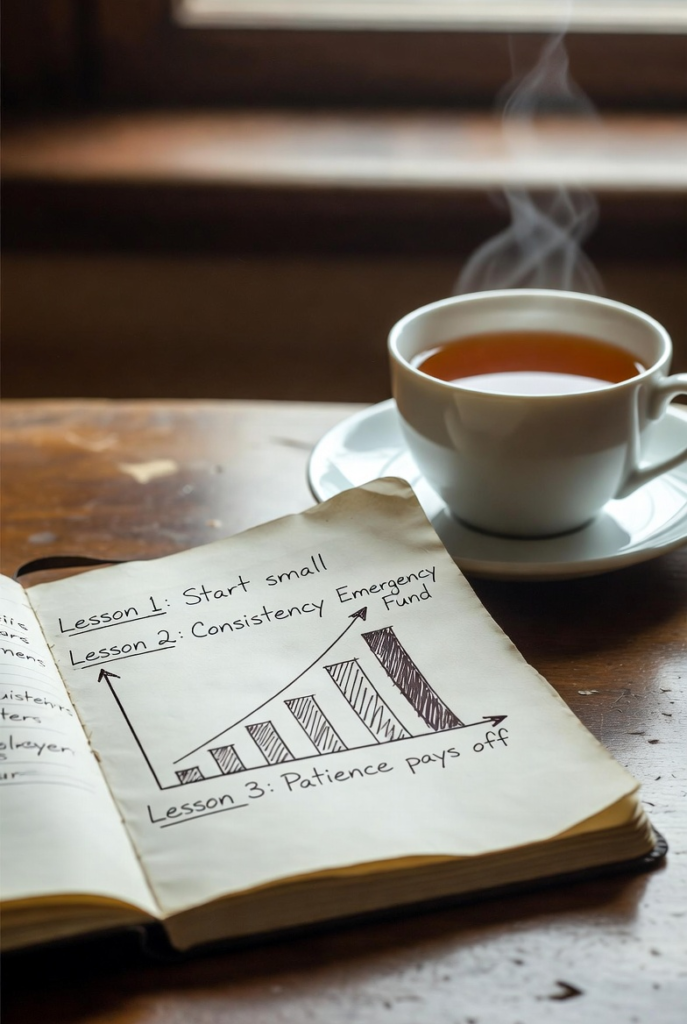
If I could go back and talk to my younger self during those early crashes, I’d tell him three things:
First, build the emergency fund before you chase returns. It’s not sexy, but it’s the foundation everything else stands on.
Second, avoid debt that isn’t productive. I watched too many people lose everything because they were leveraged to the hilt when the tide turned.
Third, focus on increasing your income and skills alongside protecting what you have. The best protection in uncertain times is the ability to earn more when opportunities arise.
These aren’t revolutionary ideas. They’re the quiet truths that survive every market cycle.
The Quiet Strength of Preparation
Today, when I look at my finances, I don’t feel invincible — I feel prepared. I still have investments that will fluctuate, but I also have safety nets, diversified holdings, and a mindset that doesn’t fall apart when the news is bad.
The world will always be uncertain. New crises will come. But the people who protect their money well aren’t the ones who predict every downturn perfectly. They’re the ones who build quietly, consistently, and with humility.
They have cash reserves. They understand their own risk tolerance. They avoid decisions driven by fear or greed. And they keep learning from every storm they’ve weathered.
I’m not a financial advisor, and this isn’t advice tailored to your situation. It’s simply what has worked for me after watching markets rise and fall more times than I care to count.
If you’re feeling anxious about the economy right now, know that you’re not alone. The uncertainty is real. But so is the power you have to protect what matters most — your peace of mind and your family’s future.
Start small. Build one layer of protection at a time. And remember that the goal isn’t to eliminate risk entirely. It’s to make sure that when the next crash comes — and it will — you’re still standing.
Written by Dhanur