-
Finance

Trump Accounts Explained: How the New 530A Savings Account for Kids Actually Works
Trump Accounts, formally known as 530A accounts under the federal tax code, opened for contributions on July 4, 2026, after being created as part of the One Big Beautiful Bill Act. They are a new kind of tax-deferred savings account set up in a child’s name, funded partly by the federal government and partly by parents, relatives, and in a…
Read More » -
Finance

How to Open a Trump Account for Your Child: A Step by Step Walkthrough of Form 4547
Most articles covering Trump Accounts stop at explaining what the program is and never actually walk through the process of opening one. That gap matters, because the account is not automatic. No child is enrolled by default, even one born in the eligible window between 2025 and 2028, and no seed deposit shows up without a parent or guardian actively…
Read More » -
Finance

Trump Account vs 529 Plan vs Roth IRA for Kids: Which Should You Actually Use
Parents now have three genuinely different accounts to choose from when saving on behalf of a child: the newly launched Trump Account, the long-established 529 college savings plan, and a custodial Roth IRA. Each one was built for a different purpose, taxed differently, and restricted differently in terms of who can contribute and when the money can come out. Because…
Read More » -
Finance

Imposter Scams Cost Consumers Billions in 2026: How to Actually Spot One Before You Send Money
The Federal Trade Commission’s most recent fraud data shows that people reported losing $3.5 billion to imposter scams in 2025, an increase of nearly 20 percent from the year before. The FTC received more than one million individual reports about imposter scams during the year, and for the ninth year running, imposter scams were the single most reported category of…
Read More » -
Finance

How Robo Advisors Actually Rebalance Your Portfolio Behind the Scenes
Most robo advisor content is comparison-shopping material, ranking providers by fee level and available account types without ever explaining what is actually happening inside the portfolio on an ongoing basis. Two of the most important mechanisms, automatic rebalancing and tax-loss harvesting, are frequently mentioned as selling points but rarely explained in terms of the actual mechanics involved. Understanding how these…
Read More » -
Finance

What a 1 Percent Fee Difference Really Costs You Over 20 Years, With Real Numbers
A 1 percent annual fee sounds small enough to ignore, and that is precisely why so many investors do ignore it. But an investment fee is not a one-time cost; it compounds against your balance every single year for as long as you hold the investment, quietly consuming a share of returns that would otherwise have kept growing on your…
Read More » -
Finance

Emergency Fund vs Investing: How to Decide What to Do With Your Next $1,000
You have $1,000 sitting in your account. Maybe it is from a bonus, a tax refund, or simply the result of a few months of disciplined saving. Now what? Two voices in your head are competing. One says: invest it now, time in the market matters, you are losing money to inflation every day you wait. The other says: you…
Read More » -
Finance
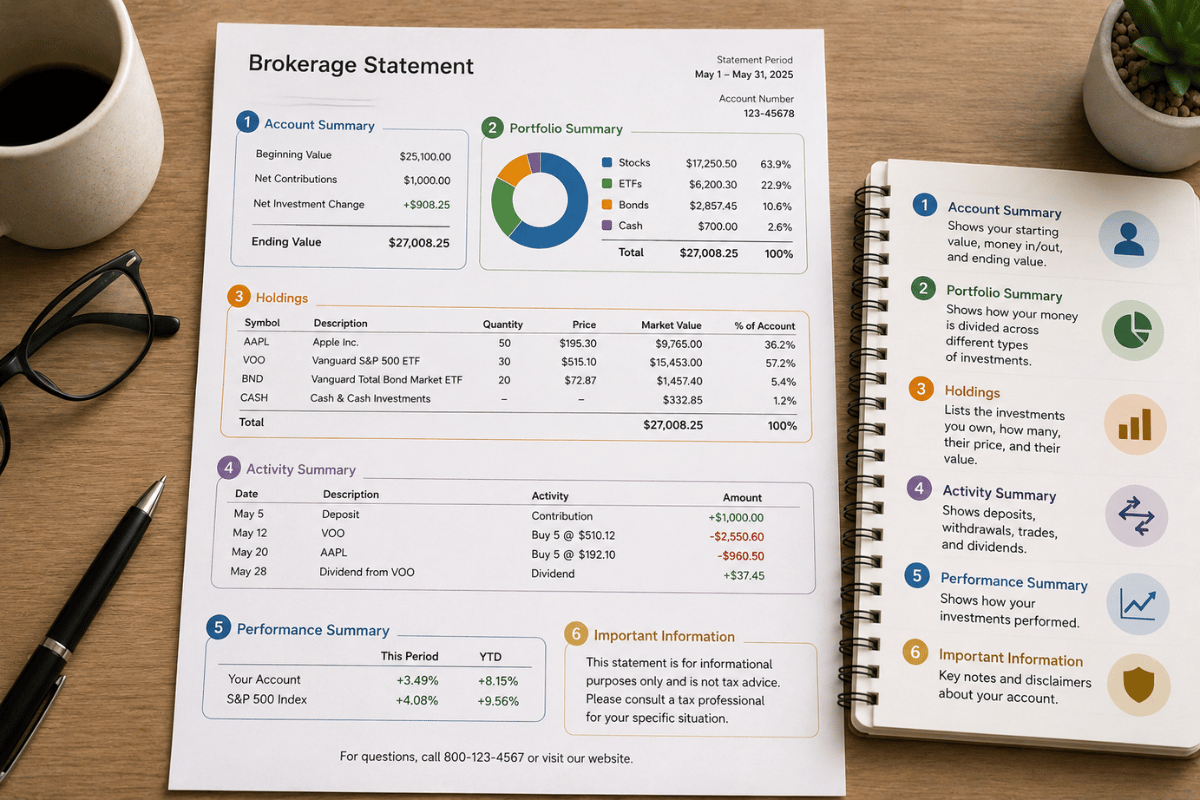
How to Read a Brokerage Statement: A Plain-English Guide for New Investors
You opened a brokerage account, made your first investment, and received a statement. Now you are staring at a document full of abbreviations, columns, and numbers you are not sure how to interpret. You are not alone. Brokerage statements are genuinely confusing for most new investors, and the financial industry has done little to simplify them. This guide walks through…
Read More » -
Finance

Debt Avalanche vs Debt Snowball: Which Payoff Method Saves You the Most Money?
If you are carrying multiple debts and trying to pay them off, the order in which you tackle them makes a significant difference. Two methods dominate personal finance advice: the Debt Avalanche and the Debt Snowball. They use the same total monthly payment but produce different outcomes, financially and psychologically. This guide explains both methods clearly, shows you the real…
Read More » -
Finance

Index Funds vs ETFs: What Is the Real Difference and Which One Should You Invest In?
If you have spent any time researching investing, you have almost certainly encountered index funds and ETFs. They are often mentioned in the same breath, sometimes as if they are identical, sometimes as if choosing between them is one of the most important financial decisions you will make. The reality is more nuanced. Index funds and ETFs are similar in…
Read More » -
Finance

Buy Now Pay Later (BNPL): The Real Cost, Hidden Risks, and When It Actually Makes Sense
Buy Now Pay Later has exploded in popularity over the last five years. Services like Klarna, Afterpay, Affirm, and dozens of competitors have made it possible to split almost any purchase into instalments with a tap of your phone. On the surface, it sounds like a better credit card: no interest, flexible payments, instant approval. But BNPL is not free…
Read More » -
Finance

The 50/30/20 Budget Rule Explained: How to Actually Use It in 2026 (With Real Examples)
Managing money feels overwhelming for most people. But here is the truth: you do not need a complicated spreadsheet, a finance degree, or a paid app to take control of your finances. You just need one simple framework that has been proven to work. The 50/30/20 budget rule is that framework. It is straightforward, flexible, and used by millions of…
Read More »