



Let’s be honest for a second.
In 2026, a lot of us open our banking app, look at the numbers, and think: “How am I supposed to save when everything costs more?” Groceries feel painful, rent or mortgage payments are heavier, and that little voice in your head keeps saying you’re falling behind.
If that’s you right now — I see you. This article isn’t about becoming a super-frugal minimalist overnight. It’s about realistic, gentle ways to start saving again without making your life miserable.
Here are 7 kind and practical steps that actually work when life feels expensive.
1. Start with Self-Compassion (Yes, Really)
Before you cut a single expense, give yourself permission to feel overwhelmed. Inflation is not your fault, and you’re not bad with money just because it’s harder right now.
A kind mindset is the foundation. When you stop beating yourself up, it becomes much easier to make small, sustainable changes instead of dramatic ones that you’ll quit after two weeks.
2. Build a “Bare Bones” Budget First
Don’t try to optimize everything at once. Start simple.
List only your must-pay expenses: rent, utilities, groceries, transportation, and minimum debt payments. See exactly how much is left after those.
Many people discover they’re actually closer to saving than they thought — they were just spending unconsciously on small things that add up.

3. Protect What Matters Most to You
Instead of cutting everything you enjoy, choose 1–2 things that genuinely improve your quality of life and protect them.
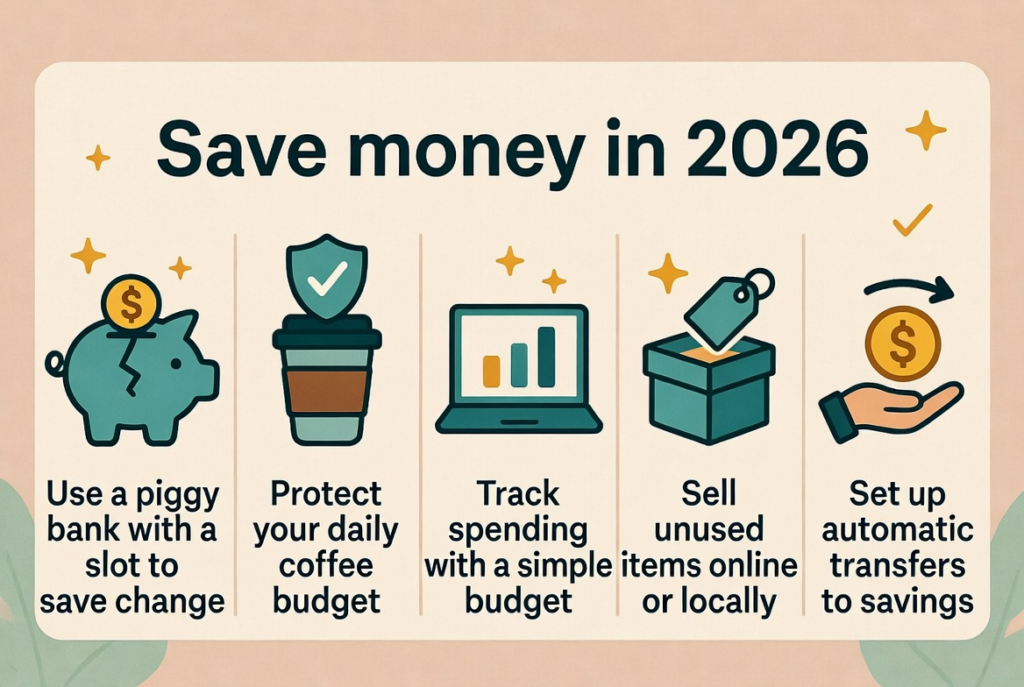
For some it’s a weekly coffee date with a friend. For others it’s a gym membership or their favorite streaming service. When you keep what matters, cutting the rest feels less like punishment and more like a smart choice.
4. Make One Small Cut That Feels Almost Invisible
Look for expenses that don’t bring you much joy but quietly drain your account:
- Unused subscriptions
- Delivery fees from ordering food too often
- Brand-name items where the generic version is basically the same
Pick just one of these this week. Small wins build confidence faster than big overhauls.
5. Turn “I Wish I Had More Money” into “How Can I Bring In a Little Extra?”
Saving is important, but sometimes earning a bit more is less painful.
Gentle ideas that don’t require burning out:
- Sell things around the house you no longer use
- Offer a skill you already have (even something simple like pet sitting, proofreading, or helping someone set up their phone)
- Ask for a small raise or look for better-paying opportunities without quitting your current job
Even $200–300 extra a month can make a surprising difference.
6. Use “Future You” Automation
The easiest way to save is to make it automatic so you don’t have to think about it every time.
Set up a small automatic transfer to a high-yield savings account the day after you get paid. Start with whatever feels doable — $25, $50, or $100. Over time, you can increase it as things get easier.
Seeing that balance grow slowly but steadily is incredibly motivating.
7. Celebrate Progress Like a Real Person
Every time you save $100, resist the urge to immediately move the goalpost. Instead, acknowledge it.
Tell a friend, write it down, or treat yourself to something small within your rules. Progress feels real when you notice it.
You Don’t Have to Be Perfect
Saving money in 2026 when everything feels expensive isn’t about perfection — it’s about consistency and kindness toward yourself.
Start with just one thing from this list this week. Maybe it’s setting up that automatic transfer, or finally canceling that subscription you forgot about. One small step is enough.
You’re not behind. You’re not failing. You’re just navigating a tough economic moment, and you’re doing it the best way you can.
The habits you build now — even the tiny ones — will compound over time. And one day you’ll look back and realize you quietly built something strong.
You’ve got this. One gentle step at a time.










Deja una respuesta