

Let’s be real for a moment.
In 2026, a lot of us get paid, pay the bills, and then… nothing is left. The paycheck disappears before the month even really starts. Groceries are more expensive, rent or mortgage feels heavier, and that constant “I’m barely making it” feeling starts to wear you down.
If you’re tired of living paycheck to paycheck, I get it. This isn’t another “just budget better” lecture. These are realistic, kind, and actually doable steps that regular people are using right now to finally break the cycle — without feeling deprived or overwhelmed.
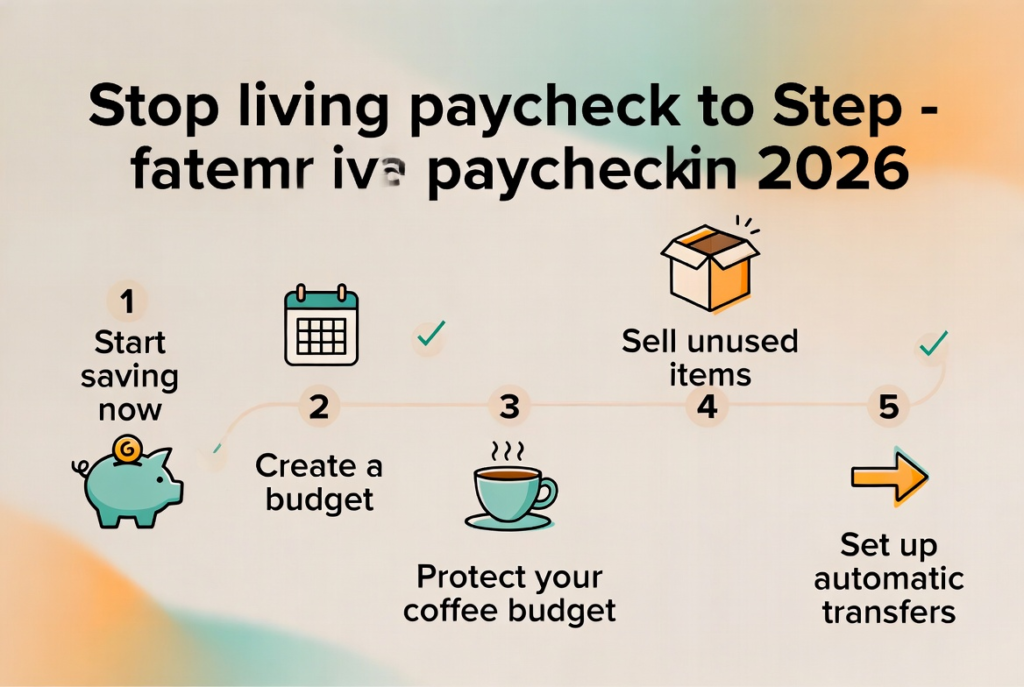
1. First, Be Kind to Yourself
Before you change anything, give yourself a break. Living paycheck to paycheck in this economy isn’t a personal failure — it’s the reality for millions of people right now.
Starting with self-compassion makes it so much easier to take small steps instead of forcing huge, unsustainable changes that you’ll quit after a week.
2. Know Exactly Where Your Money Is Going
You can’t fix what you don’t see.
For the next 30 days, track every single dollar you spend (yes, even the $4 coffee). Use a simple app or just a notebook. Most people are shocked when they see how much little things add up.
This isn’t about judging yourself — it’s about getting clarity so you can make smarter choices.

3. Create a “Bare Minimum” Budget First
Don’t try to optimize everything at once.
Write down only your true essentials: rent, utilities, groceries, transportation, insurance, and minimum debt payments. See exactly how much money you have left after those.
Then decide how much of that leftover money you can realistically move to savings or debt — even if it’s just $50–$100 right now. Starting small is how real change happens.
4. Protect One Thing That Makes You Happy
This is my favorite step because it feels human.
Choose one small pleasure that truly improves your week (your Friday takeout, your gym class, your streaming subscription) and protect it. Then get creative about cutting everything else.
When you keep one joy, the rest of the cuts don’t feel like punishment — they feel like smart choices.
5. Bring in a Little Extra Money (Without Burning Out)
Sometimes saving more isn’t enough — you also need to earn a bit more.
Gentle ideas that don’t require a second full-time job:
- Sell things you already own but don’t use
- Offer a simple service you’re already good at (pet walking, tutoring, helping with tech setups)
- Take on one small weekend gig
Even an extra $200–$400 a month can completely change how the end of the month feels.
6. Automate the Hard Parts
The easiest way to stop living paycheck to paycheck is to make saving automatic.
Set up a small transfer to a high-yield savings account the day after you get paid. Start tiny if you need to — $25 or $50. You’ll barely notice it’s gone, but you’ll start seeing that balance grow.
Automation removes the constant willpower battle.
7. Celebrate Every Small Win
When you finally save your first $200 or pay off a small debt, don’t just move on to the next goal. Celebrate it.
Tell a friend, write it down, or treat yourself to something small within your new rules. Your brain needs to see that progress is happening — that’s what keeps you going.
You’re Not Stuck Forever
Breaking the paycheck-to-paycheck cycle in 2026 doesn’t happen overnight, and it doesn’t require perfection. It happens one small, realistic step at a time.
Pick just one thing from this article and try it this week. Maybe it’s tracking your spending for a few days, or setting up that first automatic transfer. One step is enough to start changing how the end of the month feels.
You’re not behind. You’re not failing. You’re just figuring it out in a tough economy, and that takes courage.
The habits you start building now — even the tiny ones — will quietly add up. One day you’ll look at your bank account and realize you’re no longer living paycheck to paycheck… and it will feel really good.
You’ve got this. One gentle, realistic step at a time.