


Why do so many smart, educated people make terrible financial decisions?
They buy high and sell low. They panic during market crashes. They fall in love with “hot” investments and ignore basic math. The answer isn’t lack of intelligence — it’s psychology.
Behavioral finance studies how our emotions, biases, and mental shortcuts affect our money decisions. In the age of AI, crypto, and instant information, these psychological traps are more dangerous than ever — but new technologies can also help us overcome them.
At Next Future Finance, we’ve covered strategies for building wealth. Today, let’s explore the mind behind the money and how you can use behavioral finance + modern tools to make much smarter decisions.
The Most Common Psychological Traps in 2026
1. Loss Aversion
We feel the pain of losing money about twice as strongly as the pleasure of gaining the same amount.
Example: During a market dip, many investors sell in panic, locking in losses instead of staying the course.
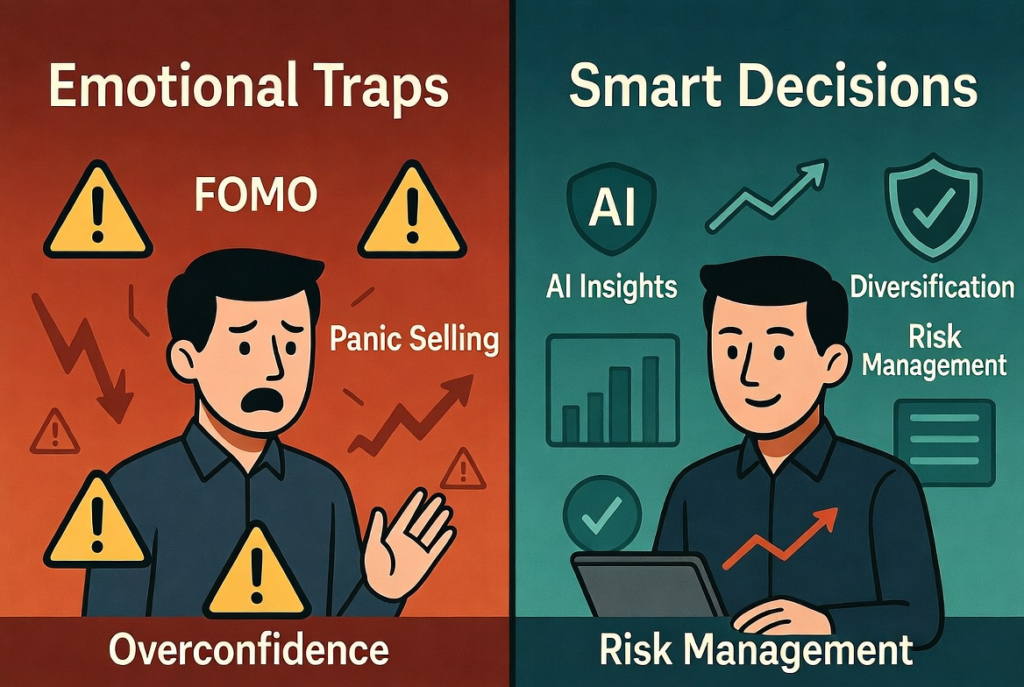
2. FOMO (Fear Of Missing Out)
Especially powerful in crypto and AI stocks. Seeing others make quick gains triggers impulsive buying.
3. Overconfidence
After a few successful trades or AI recommendations, we start believing we’re better than we actually are.
4. Anchoring
Sticking to the first piece of information we hear (e.g., “Bitcoin will never go below $60,000 again”).
5. Herd Mentality
Following the crowd on social media or Reddit without doing your own analysis.
How New Technologies Can Help You Overcome These Biases
The good news? The same technologies that create new risks can also protect us from our own worst instincts.
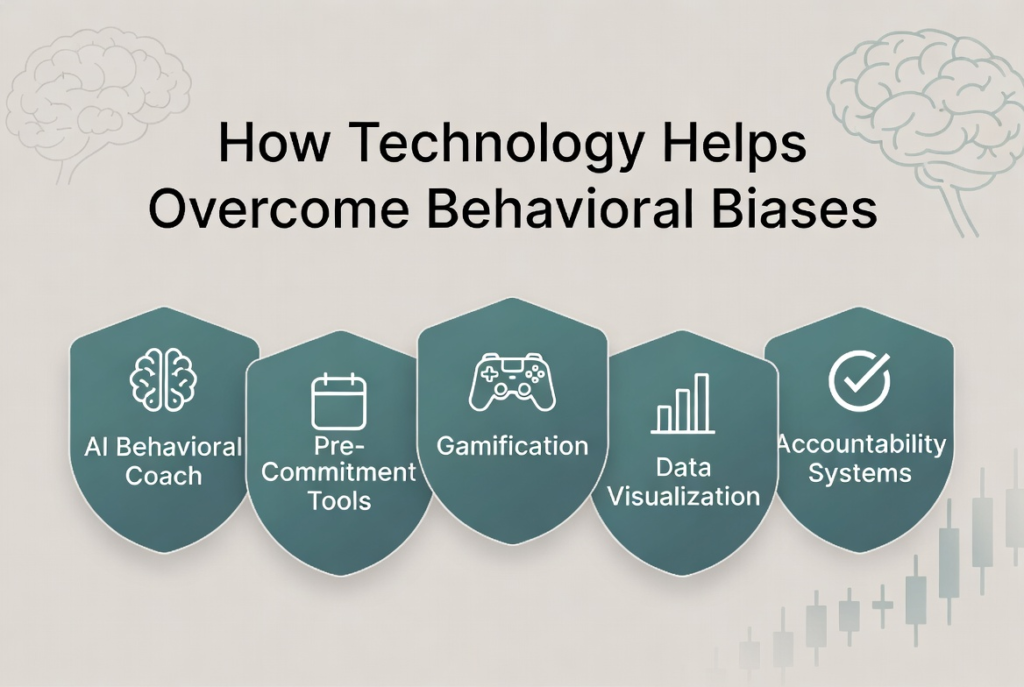
1. AI as Your Behavioral Coach
Modern AI financial agents can:
- Detect when you’re about to make an emotional decision
- Send calm, data-based reminders
- Automatically rebalance your portfolio according to pre-set rules (removing emotion)
2. Pre-Commitment Tools
Apps and platforms now let you:
- Set automatic investment rules that execute even when you feel scared or greedy
- Use “cooling-off” periods before large transactions
- Lock certain funds for long-term goals
3. Gamification and Habit Building
Apps like Acorns, Qapital, and Long Game turn good financial behavior into games with rewards, making discipline more enjoyable.
4. Data Visualization
Seeing clear, beautiful charts of compound growth over time helps fight short-term thinking.
5. Accountability Systems
Shared family dashboards or AI-generated monthly reports create external accountability.
Practical Strategies You Can Use Right Now
- Create “If-Then” Rules Example: “If the market drops 15%, I will automatically buy more of my core index funds instead of selling.”
- Use Technology to Remove Temptation Turn off price notifications for speculative assets. Set up automatic monthly investments so you don’t have to decide every month.
- Practice “Mental Accounting” Positively Create separate “buckets” for different goals (emergency fund, retirement, fun money) using apps like Monarch or YNAB.
- Review Your Portfolio on a Fixed Schedule Once per quarter only — not every time the market moves. This reduces emotional reactions.
- Combine Human + AI Use AI for analysis and speed, but keep a human advisor or trusted friend for major decisions.
The Psychology of True Wealth
Real wealth isn’t just about having more money. It’s about having peace of mind, freedom, and control over your decisions.
The most successful people in the AI and crypto era aren’t the smartest at predicting markets — they’re the best at managing themselves.
They understand their biases and build systems (both technological and behavioral) that protect them from their own weaknesses.
Your Next Step
Take 15 minutes today and ask yourself:
- What is one financial decision I’ve made in the past year that was driven more by emotion than logic?
- What system can I put in place (with technology or rules) to prevent that mistake in the future?
Small changes in behavior, amplified by smart tools, can create massive differences in your long-term wealth.
You now have more powerful tools than any previous generation to become a better investor. The question is: will you use them to work with your psychology or continue fighting against it?
What’s the biggest psychological challenge you face with money? FOMO, loss aversion, or something else?
Share in the comments — talking about it is often the first step to overcoming it.
And explore our other articles on behavioral finance topics, AI in personal finance, sustainable investing, and building generational wealth right here on Next Future Finance.
Master your mind. Master your money.