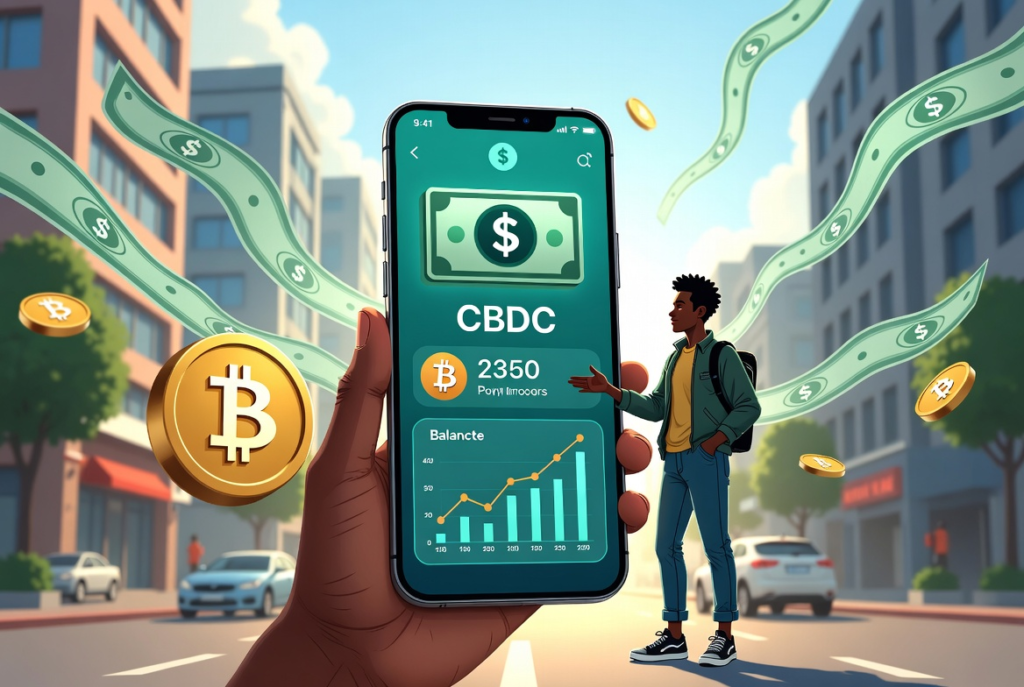


Picture this: It’s 2030. You walk into a coffee shop, tap your phone, and pay instantly. No bank fees. No waiting for settlement. But behind the scenes, your central bank knows exactly what you bought, when, and where. At the same time, you can send money to a friend across the world using a cryptocurrency wallet — private, fast, and without anyone asking questions.
Which one feels better to you?
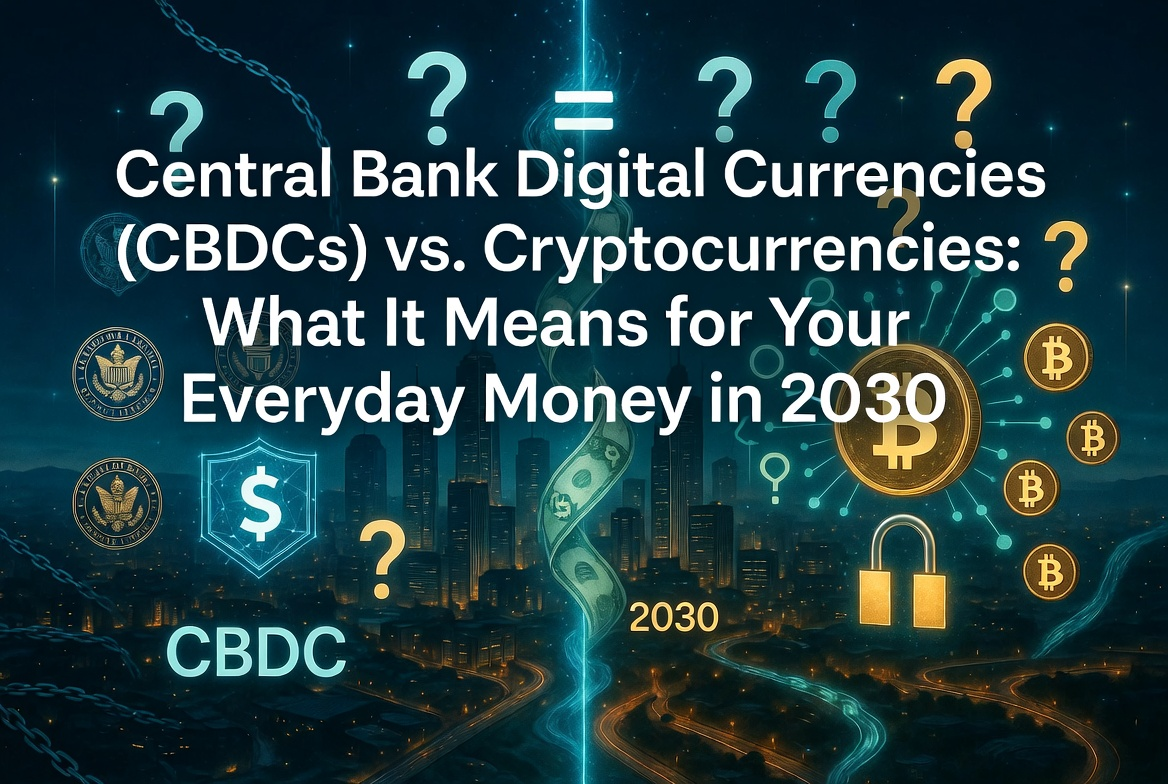
This isn’t a distant future. Central Bank Digital Currencies (CBDCs) and cryptocurrencies are already reshaping money as we know it. By 2030, they will directly affect your daily spending, savings, investments, and even your privacy.
At Next Future Finance, we’ve covered how AI agents will manage your money and how tokenization is opening new investment doors. Now let’s explore one of the biggest battles in the future of finance: CBDCs versus cryptocurrencies — and what it really means for your everyday wallet.
What Are Central Bank Digital Currencies (CBDCs)?
CBDCs are digital versions of traditional fiat money (like the US dollar or euro) issued and controlled by a country’s central bank.
Think of it as “digital cash” backed by the government. The Bank of England, Federal Reserve, European Central Bank, and over 100 other countries are actively developing or piloting CBDCs in 2026.
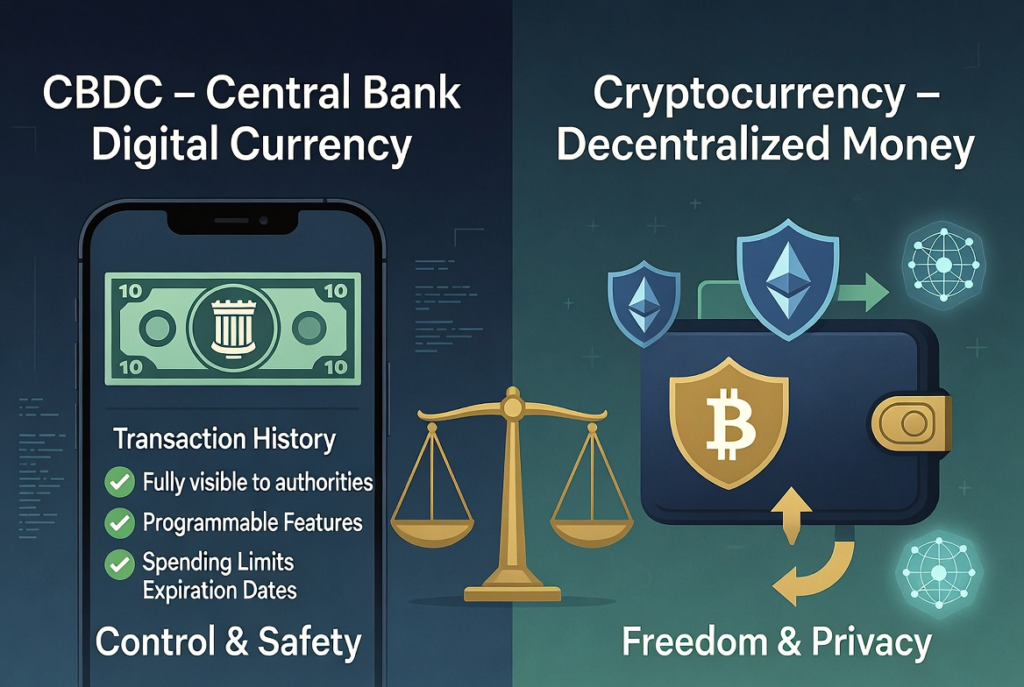
Unlike cash in your physical wallet, a CBDC exists only on a digital ledger. You could hold it in a digital wallet provided by your bank or even directly with the central bank. Transactions are fast, traceable, and programmable (for example, money that expires or can only be spent on certain things).
What Are Cryptocurrencies?
Cryptocurrencies like Bitcoin, Ethereum, and thousands of others are decentralized digital assets. They run on blockchain technology and are not controlled by any government or central authority.
Bitcoin was created as “digital gold” — a store of value outside the traditional banking system. Ethereum and others power smart contracts, decentralized finance (DeFi), and even tokenized real-world assets (which we covered in our previous article).
Crypto is borderless, often private (depending on the coin), and gives users full control over their funds.
CBDCs vs. Cryptocurrencies: The Key Differences
Here’s a clear side-by-side look at how they compare:
- Control: CBDCs = Fully controlled by central banks. Cryptocurrencies = Decentralized (no single owner).
- Privacy: CBDCs = Highly traceable (governments can see every transaction). Cryptocurrencies = Varies — some are very private (like Monero), others are transparent.
- Speed & Cost: Both are fast and cheap for everyday use, but crypto can sometimes have network fees during congestion.
- Backing: CBDCs = Backed by the full faith of the government. Crypto = Backed by network security, scarcity (Bitcoin), or utility.
- Accessibility: Both can be used globally, but CBDCs will likely be integrated directly into existing banking apps.
- ** programmability**: CBDCs can be programmed (e.g., stimulus money that must be spent quickly). Crypto smart contracts are more flexible and open.
What This Means for Your Everyday Money in 2030
By 2030, most experts expect many major economies to have launched retail CBDCs. Here’s how your daily financial life could change:
1. Faster and Cheaper Payments
Paying for groceries, bills, or sending money to family abroad could happen in seconds with near-zero fees. CBDCs will make this seamless inside traditional apps. Crypto wallets will offer the same speed for those who prefer decentralized options.
2. New Savings and Interest Opportunities
Some CBDCs may offer direct interest paid by the central bank (unlike cash today). Crypto offers staking rewards and DeFi yields. You might use both: CBDC for daily stability and crypto for higher growth.
3. Privacy Concerns
With CBDCs, governments could track spending patterns more easily. This raises big questions about financial freedom and surveillance. Cryptocurrencies (especially privacy-focused ones) could become the go-to for people who value anonymity.
4. Programmable Money
Imagine government stimulus that automatically goes into your account and must be spent within 6 months — possible with CBDCs. Crypto smart contracts already let you create similar rules for your own money.
5. Coexistence, Not Replacement
Most analysts believe CBDCs and cryptocurrencies will coexist. CBDCs for everyday stable transactions. Crypto (and tokenized assets) for investment, global transfers, and innovation. You’ll likely use both, just like you use both your bank account and investment apps today.
Benefits and Risks to Consider
CBDC Advantages:
- Stability and trust (government-backed)
- Easy integration with existing finance
- Potential for financial inclusion
CBDC Risks:
- Reduced privacy
- Risk of government control over spending
- Possible negative interest rates
Cryptocurrency Advantages:
- True ownership and censorship resistance
- Innovation and high growth potential
- Global, borderless access
Cryptocurrency Risks:
- Volatility
- Regulatory uncertainty
- Security responsibility falls on you
The smartest approach? Diversify. Use CBDCs for daily banking stability and keep a portion in cryptocurrencies and tokenized assets for growth and freedom — exactly the kind of strategy we discuss in our passive income and generational wealth articles.
How to Prepare Today (in 2026)
You don’t need to wait until 2030. Here’s a simple action plan:
- Educate yourself — Understand your country’s CBDC pilot (many are already testing).
- Get comfortable with crypto wallets — Start small with Bitcoin or stablecoins.
- Explore hybrid tools — Some apps already let you hold both CBDC-like stablecoins and true crypto.
- Focus on privacy and security — Use hardware wallets and learn basic self-custody.
- Combine with AI agents — Let your AI financial assistant (from our previous article) help you balance CBDC and crypto holdings automatically.
The Future of Money Is Dual
By 2030, your “everyday money” will likely be a smart mix of centralized digital cash (CBDCs) for convenience and decentralized cryptocurrencies for freedom and opportunity.
This isn’t about choosing sides. It’s about understanding both systems so you can make better decisions for your family’s financial future.
The technology we’ve covered here — AI agents, tokenized assets, and now CBDCs vs crypto — all point to one truth: the future of finance is more accessible, more automated, and more powerful than ever before.
What do you think — will you embrace CBDCs for convenience, stick with crypto for freedom, or use both? Share your thoughts in the comments.
If you enjoyed this deep dive into the future of money, explore our other articles on AI in personal finance, tokenization of real-world assets, and proven strategies for passive income and generational wealth right here on Next Future Finance.
Your money in 2030 starts with the choices you make today.