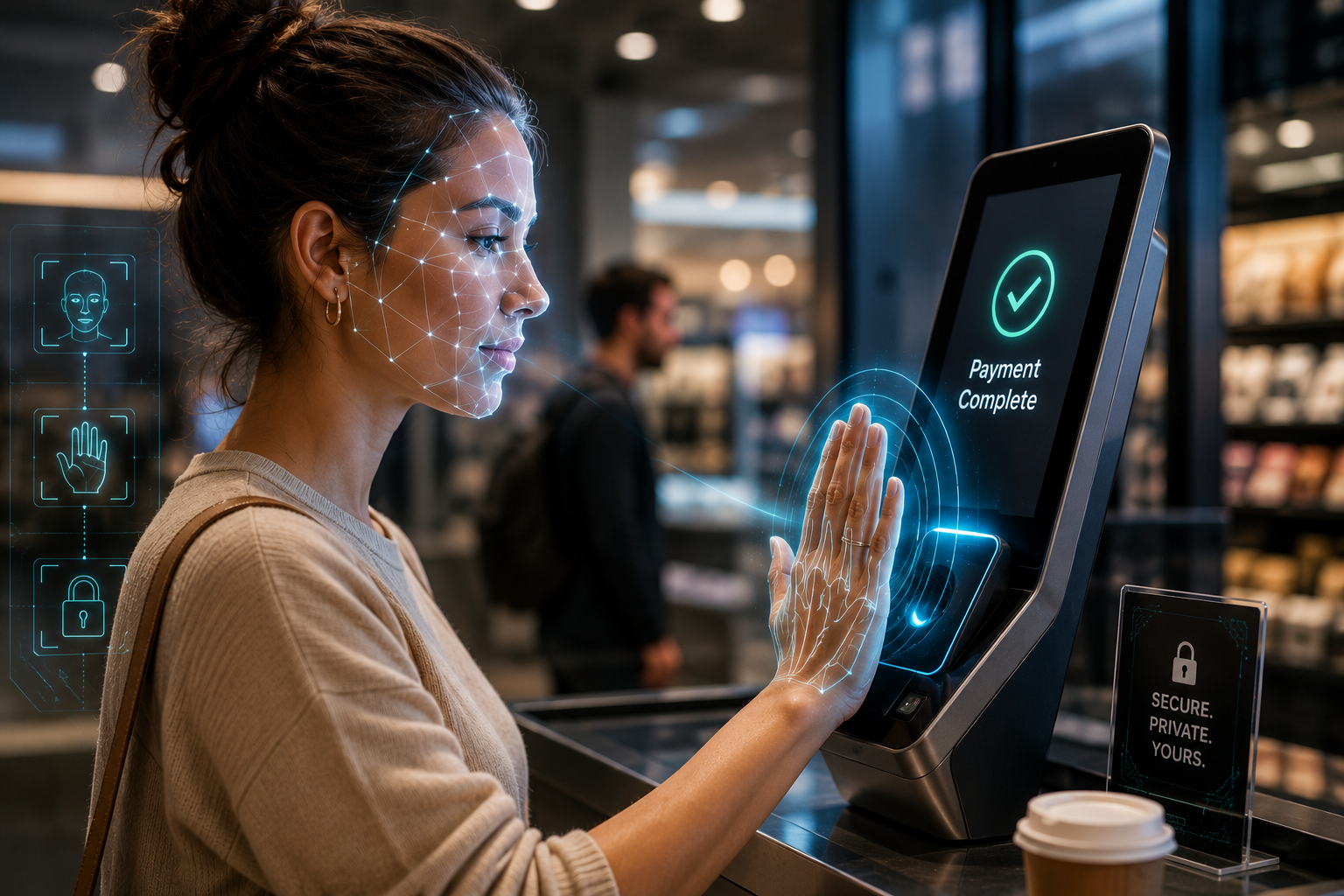



A finance employee at a multinational company once joined what looked like a completely normal video call with his company’s CFO and several other senior colleagues. Everyone’s face was there. Everyone’s voice matched. Over the course of the call, he was instructed to wire the equivalent of tens of millions of dollars to a set of new accounts. He did it — following what appeared to be a standard, if unusually large, internal transfer request from people he’d worked with for years.
- Why AI Changed the Economics of Fraud
- How Voice Cloning Scams Actually Work
- Deepfake Video Fraud: Beyond the Corporate Boardroom
- AI-Written Phishing and Romance Scams: Why They’re Suddenly So Convincing
- Fake Investment Platforms and AI-Generated “Proof”
- The Groups Being Targeted Most, and Why
- Table: Old-School Scam vs. AI-Enhanced Version
- Why “I’d Know My Kid’s Voice Anywhere” Doesn’t Hold Up Anymore
- The Defense That Actually Works: A Family and Personal Verification System
- How This Connects to the Broader Shift in Fintech
- What Banks and Platforms Are Doing About It
- A Practical Checklist: Protecting Yourself and Your Family Today
- What to Do If You’ve Already Been Targeted or Scammed
- Frequently Asked Questions
- The Bottom Line
- Sources
Every person on that call except him was an AI-generated deepfake. Real faces, real voices, cloned from publicly available video and audio, animated in real time to hold a live conversation and issue instructions that felt completely ordinary. The money was gone before anyone realized the “meeting” had never included a single real colleague.
That case became one of the most widely reported examples of AI-enabled corporate fraud, but the underlying technology behind it isn’t reserved for six-figure corporate wire transfers anymore. The same voice-cloning and video-generation tools are now being pointed at individual consumers — parents, retirees, small-business owners — and the entry cost for a convincing scam has dropped from “requires real skill and real footage of the target” to “requires a three-second audio clip and a free app.” That shift is the actual story here, and it’s one every reader of this site needs to understand before it touches their own accounts.
This piece breaks down exactly how AI-powered financial fraud works right now, which scams are growing fastest, why traditional “trust your gut” advice is no longer reliable on its own, and the specific, practical habits that do still hold up against this new generation of fraud.
Why AI Changed the Economics of Fraud
Fraud has always existed, and impersonation scams — the fake IRS agent, the “grandparent scam,” the too-good-to-be-true investment tip — are nothing new. What’s changed isn’t the concept. It’s the cost and the quality.
Before generative AI became widely accessible, convincingly impersonating a specific person took real effort: hours of audio to train a passable voice model, technical skill most scammers didn’t have, and video manipulation tools that produced obviously fake results. That effort acted as a natural filter. Most fraud stayed generic — a scam email sent to a million inboxes, hoping a small percentage would bite on something vague.
AI tools removed that filter almost entirely. A few seconds of someone’s voice, pulled from a social media video, a voicemail greeting, or even a public interview, is now enough to generate a convincing clone using freely available software. Video generation has followed the same trajectory: tools that once required a research lab and significant compute now run through consumer apps, some explicitly marketed for entertainment, that can be repurposed for fraud with no technical background required.
The result is a shift from generic fraud at scale to personalized fraud at scale — the worst combination for a defender. Scammers no longer have to choose between targeting one person convincingly or targeting a million people vaguely. AI lets them do both at once, which is a big part of why loss figures tied to impersonation and AI-assisted fraud have climbed sharply across multiple countries’ consumer protection reporting in the last two years.
How Voice Cloning Scams Actually Work
The mechanics are simpler than most people expect, which is exactly what makes the threat so uncomfortable.
Step 1: Sample collection. The scammer needs a short audio sample of the target’s actual voice — often just three to ten seconds. Public sources are everywhere: a TikTok or Instagram video, a voicemail greeting, a podcast appearance, a recorded webinar, even a voice message sent in a group chat that later leaked or was scraped.
Step 2: Voice model generation. That sample gets fed into a voice-cloning tool, several of which are free, legal for legitimate use, and require no special expertise. Within minutes, the tool can generate new speech in that person’s voice, saying anything the scammer types.
Step 3: The scenario. Armed with the cloned voice, the scammer builds a plausible emergency: a grandchild in a car accident who needs bail money urgently, an executive traveling abroad who needs an emergency wire transfer approved immediately, a family member stranded and asking for a quick gift-card purchase to cover a hotel bill. Urgency and isolation are the constants across nearly every version — the scenario is built specifically to prevent the target from pausing to verify.
Step 4: The call. The target receives a call, hears a voice that sounds unmistakably like someone they love or trust, in evident distress, asking for money right now, and often explicitly asking them not to tell anyone else — a request framed as protecting the “victim,” but which is really designed to prevent the one thing that would break the scam: a second opinion.
The entire attack can be built and executed within hours of the scammer obtaining a usable voice sample, and the same pipeline has been documented targeting elderly parents, business owners receiving fake “urgent client” calls, and even close friends replicating a trusted person’s voice to request app-based peer-to-peer transfers that are difficult to reverse once sent.
Deepfake Video Fraud: Beyond the Corporate Boardroom
While the corporate wire-fraud case at the top of this article involved a live video call, the same underlying technology is showing up in scenarios much closer to everyday consumer life.
Fake video testimonials for investment scams. Scammers generate deepfake videos of well-known financial personalities, executives, or even TV news anchors appearing to endorse a specific investment platform or cryptocurrency. Because the face and voice are recognizable and the video quality is convincing, these clips spread on social media and lend false credibility to platforms that are, in reality, outright theft operations.
Fake video verification for “proof of life” scams. In more sophisticated romance and relationship scams, a scammer may use a short, low-resolution deepfake video call to briefly “prove” they’re a real person matching their profile photos, just long enough to build trust before the call conveniently drops due to “bad connection,” after which the relationship continues over text and voice notes for months, eventually leading to a request for money.
Synthetic identity verification bypass. Some fraud rings use deepfake video and photo generation to attempt to pass the “liveness checks” that banks and fintech apps use during account opening — the step where you’re asked to blink, turn your head, or hold up an ID next to your face. This is a more technical form of fraud aimed at opening fraudulent accounts rather than directly scamming an individual consumer, but it’s part of the same technological shift, and it’s part of why account-opening verification has become noticeably more rigorous at many banks and fintech platforms over the past year.
AI-Written Phishing and Romance Scams: Why They’re Suddenly So Convincing
For years, one of the most reliable tells of a scam email or message was bad writing: awkward grammar, generic greetings, obvious translation errors. That tell has largely disappeared.
Large language models can now generate phishing emails, fake customer-service chats, and romance-scam messages that are grammatically flawless, contextually appropriate, and — worse — personalized using information scraped from social media, data breaches, or public records. A scammer no longer needs any particular writing skill or even fluency in the target’s language; the AI supplies both instantly, and can maintain a consistent, emotionally engaging “personality” across weeks or months of conversation with minimal ongoing effort from the person actually running the scam.
This matters because romance scams and long-con investment scams (sometimes called “pig butchering” scams in industry terminology, where a target is slowly built up before being persuaded to invest heavily in a fake platform) depend entirely on sustained, personalized, emotionally convincing communication over time. AI didn’t just make these scams more convincing — it made them dramatically cheaper to run at scale, because one scammer using AI tools can now maintain dozens of simultaneous, personalized “relationships” that would previously have required a much larger team of human operators.
Fake Investment Platforms and AI-Generated “Proof”
Beyond communication, AI is being used to manufacture the visual and documentary “proof” that makes fake investment platforms convincing.
Scammers generate realistic-looking trading dashboards showing fabricated but visually convincing account growth, sometimes allowing a target to make a small initial “withdrawal” successfully — funded by the scammer, not by real returns — specifically to build enough confidence to invest a much larger amount, which then can’t be withdrawn at all. AI tools help generate the fake charts, the fake regulatory-looking credentials, and even fake customer reviews and social proof at a scale and quality that would have taken a real design and content team to produce previously.
This connects directly to a theme covered elsewhere on this site: as legitimate platforms move toward tokenized real-world assets and increasingly sophisticated digital investment products, the visual and technical bar for a fake version of that same legitimacy has dropped at almost exactly the same pace. The more normal genuinely complex, tech-forward financial products become, the harder it gets for an average consumer to distinguish a legitimate innovative platform from a well-produced fake one using the same visual language.
The Groups Being Targeted Most, and Why
AI-powered fraud isn’t distributed evenly. Certain groups face meaningfully higher exposure, for specific, identifiable reasons.
Older adults remain the most targeted group for voice-cloning “emergency” scams, in part because they’re statistically more likely to hold accessible savings, and in part because scammers rely on a generational gap in awareness of how cheap and accessible this technology has become — a gap that’s closing, but not fast enough.
Small-business owners and finance staff are targeted with executive-impersonation scams, following the pattern from the opening example, precisely because a single successful wire transfer can be worth far more than months of consumer-level fraud attempts combined.
Parents of teenagers and young adults, ironically, face a newer version of the classic scam: a cloned voice of their child claiming to be in trouble, which is particularly effective because parents are conditioned to respond to a distressed child’s voice with urgency rather than skepticism, which is exactly the emotional state a scam is designed to exploit.
People who are active and identifiable on social media face higher risk simply because they’ve provided more raw material — video and audio — for a scammer to clone from in the first place. This doesn’t mean stepping away from social media, but it does mean thinking differently about how much unscripted video and voice content is publicly accessible, particularly for family members in a position to receive an emergency-sounding call.
Table: Old-School Scam vs. AI-Enhanced Version
| Scam type | Traditional version | AI-enhanced version in 2026 |
|---|---|---|
| Grandparent/family emergency scam | Generic voice, often a bad guess at cadence, easy to catch by ear | Cloned voice of the actual family member, accurate tone and speech patterns |
| Executive/CEO wire fraud | Text-based email impersonation, spelling and formatting inconsistencies | Live deepfake video call with multiple synthetic “colleagues” |
| Romance scam | Slow-typed, often broken English, generic stock photos | Fluent, personalized messaging at scale; brief deepfake video “proof of life” |
| Investment scam | Static fake website with unrealistic promises | Dynamic fake dashboards, AI-generated testimonials from recognizable faces |
| Phishing email/text | Obvious grammar errors, generic greeting | Flawless writing, personalized using scraped public data |
Why “I’d Know My Kid’s Voice Anywhere” Doesn’t Hold Up Anymore
This is worth stating plainly, because it’s the single most common piece of outdated confidence people carry into this new landscape: recognizing a voice is no longer proof of who’s actually speaking.
Modern voice-cloning tools reproduce pitch, cadence, accent, and even filler words and speech habits with enough fidelity that trained audio forensics equipment is sometimes needed to reliably distinguish a clone from the real thing — an ordinary person on a stressful, unexpected phone call has essentially no chance of catching it by ear alone. The emotional context makes it worse, not better: a scam call is specifically engineered to arrive with urgency and distress, which are exactly the conditions under which careful analytical thinking is hardest to access.
This is also why generic advice like “trust your instincts” or “you’ll know if something feels off” is no longer sufficient protection on its own. Instinct evolved to catch a stranger’s voice pretending to be someone you know. It was never built to catch a mathematically accurate reproduction of a voice you know perfectly well. The defense has to move from sensory judgment to verification procedure, which is the whole point of the next section.
The Defense That Actually Works: A Family and Personal Verification System
Because voice and video can no longer be trusted as proof of identity on their own, the effective defense isn’t sharper listening — it’s a pre-agreed verification system that doesn’t depend on how convincing the call sounds.
Set up a family safe word. Agree on a specific word or phrase with close family members that would be used to confirm identity during any unusual or urgent request for money — something never mentioned publicly, on social media, or in any recorded call. If the person on the phone can’t provide it, treat the call as a probable scam regardless of how convincing the voice sounds.
Establish a callback rule for any urgent financial request. If you receive an unexpected call asking for money, a wire transfer, or a gift-card purchase — even from a voice that sounds exactly like your child, your boss, or your business partner — hang up and call that person back on a number you already have saved, not a number provided during the call. This single habit defeats the overwhelming majority of impersonation scams, because it removes the scammer’s control over the communication channel entirely.
Slow down anything framed as secret or urgent. Any request that explicitly asks you not to tell another family member, a spouse, or a colleague, combined with pressure to act immediately, is one of the most consistent patterns across nearly every version of this fraud. Legitimate emergencies rarely require both secrecy and instant, unverified payment.
Use a second communication channel to confirm, not the same one. If the request comes by phone, verify by text or a different app. If it comes by video call, verify by phone. Scammers who’ve compromised or spoofed one channel usually haven’t compromised all of them simultaneously.
Talk to older relatives specifically about voice cloning, by name. Awareness of “scam calls” in general is common; specific awareness that a scammer can now clone a real, familiar voice is not yet universal, particularly among older adults who may still associate this kind of fraud with the older, easier-to-spot version. A direct, concrete conversation — with an example, if possible — closes that gap far more effectively than a general warning.
How This Connects to the Broader Shift in Fintech
The rise of AI-powered fraud isn’t happening in isolation from everything else changing in personal finance technology — it’s the direct shadow side of it.
As financial platforms increasingly rely on open banking connections and API-based data sharing to move money faster and more seamlessly, that same speed and seamlessness is exactly what fraudsters exploit once they’ve successfully impersonated someone — a fraudulent instruction now moves through the same fast, frictionless rails as a legitimate one. Similarly, as embedded finance puts financial products inside more and more everyday apps, it also multiplies the number of places a scammer can attempt account-opening fraud or impersonation, since there are simply more financial touchpoints in daily life than there used to be.
Perhaps most directly, the emergence of AI agents that can initiate payments on a person’s behalf raises an entirely new version of this same risk: if an AI agent can be instructed to pay a bill or make a purchase based on a voice or text command, the verification question stops being “is this really my family member” and becomes “is this really my own agent acting on my actual instruction, or a spoofed command.” The safe-word and callback-verification habits described above are worth building now, because they’ll matter even more as agentic payment systems become mainstream.
What Banks and Platforms Are Doing About It
Financial institutions and technology platforms aren’t standing still, and it’s worth knowing what protections are already in place versus what still depends entirely on individual vigilance.
Many banks have expanded fraud-monitoring systems that flag unusual transaction patterns — a large, first-time wire to a new recipient, for instance — for manual review or additional verification, specifically in response to the rise in impersonation-driven wire fraud. Some banks and payment platforms have introduced explicit “cooling off” periods or additional confirmation steps for large or first-time transfers, precisely to create friction at the moment scammers most rely on urgency.
Voice-cloning detection technology is also improving on the defensive side, with some call centers and financial institutions using AI-based tools of their own to detect synthetic voice patterns during high-risk calls, though this remains an active arms race rather than a solved problem — detection tools and generation tools are, more or less, evolving in tandem. Regulators in multiple countries have also begun treating AI-generated impersonation as an explicit, named category of fraud in consumer protection guidance, which matters because it clarifies reporting pathways and, in some jurisdictions, strengthens victims’ ability to seek reimbursement from financial institutions in certain circumstances.
None of this replaces personal vigilance — institutional protections catch a portion of fraud attempts, not all of them, and the callback-and-safe-word habits above remain the most reliable layer of defense available to an individual consumer today.
A Practical Checklist: Protecting Yourself and Your Family Today
- Set a family safe word for any urgent request involving money, shared privately and never mentioned online.
- Adopt a strict callback rule: verify any urgent financial request using a number you already have saved, never one provided during the call.
- Treat secrecy plus urgency, together, as a near-certain scam signal.
- Have a direct, specific conversation with older relatives about voice cloning, not just “scam calls” in general.
- Limit public, unscripted audio and video content where practical, especially content that could serve as a clean voice sample.
- Enable extra transaction verification or delay features on your bank and payment apps, if available.
- Confirm any investment platform’s registration independently — through a national regulator’s database, not through the platform’s own claims — before depositing money.
- Be skeptical of any investment “proof” delivered as a video testimonial, dashboard screenshot, or celebrity endorsement, and verify separately.
- Freeze or monitor credit if you or a family member has been targeted, even if no money was lost.
What to Do If You’ve Already Been Targeted or Scammed
Act immediately if money has already moved. Contact your bank or payment platform the same day, since some transfers can still be recalled or flagged within a narrow window, and delay significantly reduces the odds of recovery.
Report it, even if you didn’t lose money. Reporting attempted fraud to your national consumer protection agency and, in the US, the FBI’s Internet Crime Complaint Center (IC3) helps build the pattern data that both regulators and platforms use to respond faster to emerging scam variants.
Change and strengthen account credentials if the scam involved any account access or if you clicked a link or shared any personal information during the interaction, even if you didn’t send money.
Talk about it openly, with family and, where relevant, publicly. Scam victims frequently feel embarrassment that leads them to stay quiet, which is precisely the outcome scammers rely on — every publicly discussed case makes the next potential victim in your circle harder to fool.
Frequently Asked Questions
How much audio does a scammer actually need to clone someone’s voice? Some publicly available voice-cloning tools can produce a usable clone from as little as three to ten seconds of clear audio, which is why even a short public video or voicemail greeting can be enough raw material.
Can voice-cloning scams be detected by phone carriers or caller ID? Not reliably. Scammers frequently use number-spoofing alongside voice cloning, so a call may appear to come from a legitimate, recognized number even when it isn’t, which is exactly why the callback rule — calling a number you already have saved, rather than trusting the incoming display — matters so much.
Are deepfake video calls common in everyday consumer scams, or mostly a corporate fraud problem? Corporate wire fraud has produced the highest-dollar-value documented cases so far, but consumer-facing deepfake video is growing quickly, particularly in romance scams and fake investment endorsements, and the barrier to producing convincing deepfake video for everyday use continues to drop.
Is it safe to have any public video or audio of myself online at all? Yes — the goal isn’t to disappear from public life, which isn’t realistic or necessary for most people. The goal is awareness that this content exists as potential raw material, paired with a verification system for financial requests that doesn’t depend on recognizing a voice or face at all.
Will my bank reimburse me if I’m scammed through an AI-cloned voice? It depends heavily on your bank, your country’s regulations, and the specific circumstances of the transfer — this is an evolving area of consumer protection law. Report the fraud immediately regardless, since prompt reporting is consistently one of the strongest factors in successful recovery or reimbursement cases.
How can I tell if an investment “proof” video is a deepfake? Look for inconsistent lighting or blinking patterns, audio that doesn’t perfectly sync with lip movement, and — most importantly — verify the claim independently rather than relying on the video itself as proof. A legitimate financial professional’s endorsement can always be confirmed through their actual, verified official channels.
The Bottom Line
AI hasn’t invented a new category of scam so much as it has removed the natural friction that used to protect people from the old ones. A convincing impersonation used to require real skill, real footage, and real effort. Now it requires a few seconds of audio and a free tool, which means the volume, personalization, and sheer believability of financial fraud has jumped in a way that traditional advice — trust your gut, listen for red flags in the voice — was never built to handle.
The honest, practical response isn’t paranoia about every phone call. It’s building one specific habit that doesn’t depend on how convincing the voice or video sounds: verify through a channel the scammer doesn’t control, using a method — a safe word, a callback to a saved number — that was agreed on in advance, before any pressure or emotion is involved. That single shift, more than any amount of vigilance in the moment, is what actually holds up against this new generation of fraud.
Sources
- Federal Trade Commission, Consumer Sentinel Network Data Book and AI Voice Cloning Scam Alerts — ftc.gov
- Federal Bureau of Investigation, Internet Crime Complaint Center (IC3), Public Service Announcements on AI-Enabled Fraud — ic3.gov
- Consumer Financial Protection Bureau, Guidance on Elder Financial Exploitation and Emerging Scam Tactics — consumerfinance.gov
- Europol, Facing Reality: Law Enforcement and the Challenge of Deepfakes — europol.europa.eu
- Federal Deposit Insurance Corporation, Consumer Guidance on Wire Fraud and Impersonation Scams — fdic.gov
- World Economic Forum, Global Risks Report — Section on Synthetic Media and Financial Fraud — weforum.org
This article is for informational and educational purposes only and does not constitute financial, legal, or security advice. Always verify any urgent financial request independently and consult your bank or a qualified professional before moving money or sharing personal information. See our Financial Disclaimer for details.