



Picture this: You’ve spent years building wealth in Bitcoin, Ethereum, NFTs, tokenized real estate, and AI-powered investment portfolios. But when the time comes to pass it on… your children or grandchildren have no idea how to access it, or worse — it gets lost forever because no one knows the passwords or recovery phrases.
- Why Estate Planning Has Changed Forever
- The Biggest Risks in 2026
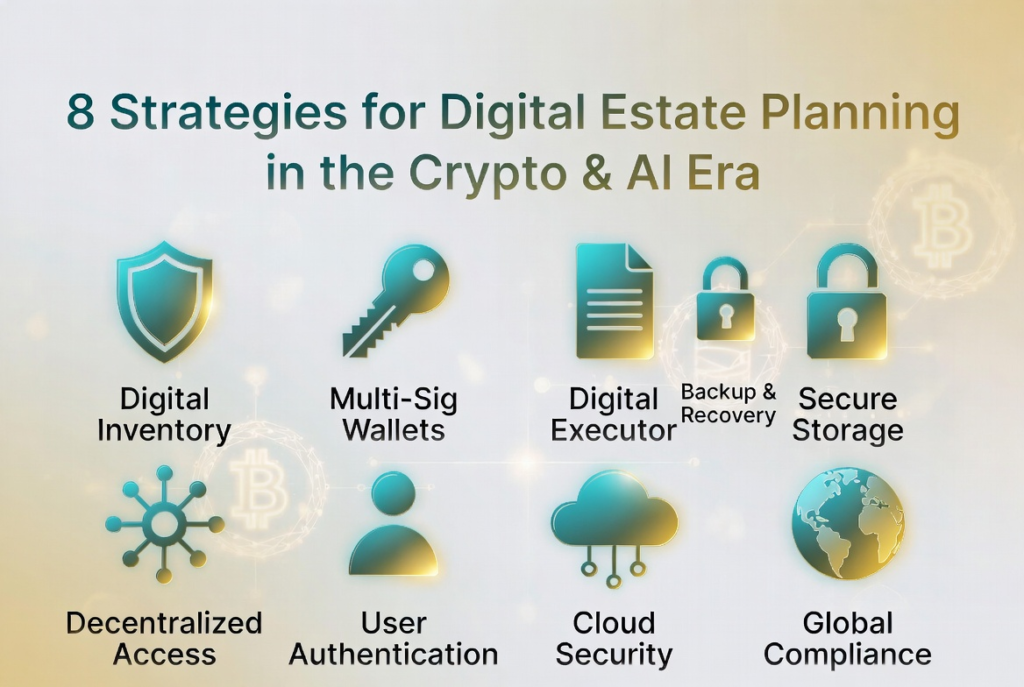
- 8 Smart Strategies for Protecting and Passing On Digital Assets
- 1. Create a Digital Asset Inventory
- 2. Use a Trusted Digital Estate Plan Service
- 3. Implement a Multi-Signature + Dead Man’s Switch Approach
- 4. Write Clear Instructions in Your Will
- 5. Appoint a Trusted “Digital Executor”
- 6. Teach Your Heirs While You’re Still Here
- 7. Use AI to Help Manage and Document Everything
- 8. Consider Trusts for Complex Portfolios
- Important Legal and Tax Considerations
- A Real-World Example
- Action Plan: Start Today
- The Future of Generational Wealth
This nightmare scenario is happening more often than you think in 2026. Traditional estate planning wasn’t designed for digital assets, and the combination of crypto and AI is creating both incredible opportunities and serious challenges for generational wealth transfer.
At Next Future Finance, we’ve explored how to build wealth with dividends, digital products, P2P lending, and teaching kids about money. Today, we tackle one of the most important — and often overlooked — topics: how to properly protect and pass on your digital assets.
Why Estate Planning Has Changed Forever
In the past, estate planning mainly involved wills, bank accounts, real estate deeds, and physical assets. Today, a large portion of many people’s wealth exists as:
- Cryptocurrencies and private keys
- NFTs and digital collectibles
- Tokenized real-world assets
- AI-managed investment accounts
- Smart contracts and DeFi positions
- Digital wallets and seed phrases
These assets are borderless, pseudonymous, and extremely sensitive to security. If you don’t plan properly, they can vanish completely when you pass away.
The Biggest Risks in 2026
- Lost Access — No one knows the wallet passwords or seed phrases.
- Tax Complications — Many countries still have unclear rules about inheriting crypto.
- Security Vulnerabilities — Sharing private keys too early can lead to theft.
- Emotional & Technical Gap — Your heirs may not understand how to manage complex digital assets.
- AI Agents & Automated Accounts — If you use AI financial agents, who controls them after you’re gone?
8 Smart Strategies for Protecting and Passing On Digital Assets
1. Create a Digital Asset Inventory
Make a detailed list of every wallet, exchange account, private key location, NFT collection, and important smart contract. Include current values and access instructions. Store this securely (never in plain text).
2. Use a Trusted Digital Estate Plan Service
Platforms like Casa, Keychain, Trust & Will, and specialized services such as Safe Haven or Crypto Estate Planning tools help you securely pass on crypto.
3. Implement a Multi-Signature + Dead Man’s Switch Approach
Set up multi-signature wallets where your heirs need multiple approvals. Use time-delayed smart contracts or “dead man’s switch” services that release information only after a certain period of inactivity.
4. Write Clear Instructions in Your Will
Your traditional will should reference a separate “Digital Asset Memorandum” (kept updated and stored safely). Never put private keys directly in the will.
5. Appoint a Trusted “Digital Executor”
Choose someone tech-savvy (or hire a professional) who understands crypto and AI tools. Give them clear instructions and limited access.
6. Teach Your Heirs While You’re Still Here
This connects directly to our previous article on teaching kids about money. Start early. Let them understand basic wallet management, seed phrase security, and the difference between hot and cold storage.
7. Use AI to Help Manage and Document Everything
Ironically, AI can be your best ally. Use AI-powered tools to:
- Automatically track all your digital assets
- Generate updated inventory reports
- Simulate different inheritance scenarios
8. Consider Trusts for Complex Portfolios
For larger estates, a revocable living trust can hold digital assets more flexibly than a simple will, especially across different countries.
Important Legal and Tax Considerations
- Cryptocurrency is treated as property in most countries — inheritance may trigger capital gains tax.
- Some jurisdictions now require disclosure of digital assets during probate.
- International families face extra complexity due to differing laws.
- Always consult an estate planning attorney who understands crypto and digital assets (this field is still emerging).
A Real-World Example
Sarah, a 48-year-old investor, had over $1.2 million in Bitcoin, Ethereum, and several high-value NFTs. She worked with a specialized attorney to:
- Set up a revocable trust
- Create a secure digital asset inventory
- Appoint her tech-savvy daughter as digital executor
- Use a multi-signature wallet with a time-delay release
When she unexpectedly passed away, her family was able to access and transfer the assets smoothly — avoiding what could have been a total loss.
Action Plan: Start Today
- This week: Make a basic list of all your digital wallets and accounts.
- This month: Update or create your will with digital asset references.
- This quarter: Speak with an estate attorney familiar with crypto.
- Ongoing: Teach your children or beneficiaries the basics of digital asset management.
The Future of Generational Wealth
In the coming years, we’ll see more sophisticated tools: AI agents that can help manage inherited portfolios, blockchain-based inheritance protocols, and “smart wills” that automatically distribute assets according to predefined rules.
The families who plan ahead will have a massive advantage in successfully transferring wealth across generations.
Protecting and passing on your digital assets isn’t just about money — it’s about peace of mind and love for your family.
Have you already thought about how you’ll pass on your crypto, NFTs, or AI-managed investments? What’s your biggest concern when it comes to digital estate planning?
Share your thoughts in the comments below.
And be sure to read our previous articles on building generational wealth, teaching kids about money, and creating digital assets for passive income.
Your digital legacy deserves the same care as your traditional one.