

I’ll never forget the night I almost sold everything.
It was March 2020. The markets were crashing, the world was shutting down, and fear was everywhere. I sat at my kitchen table staring at my portfolio, heart pounding, fingers hovering over the “sell” button. Every instinct told me to run. I was about to make a decision driven purely by panic.
Then I did something different. I opened a chat with an AI and typed: “I’m terrified right now. Help me think clearly about this.”
That conversation didn’t just stop me from selling at the bottom. It made me realize something profound: my relationship with money had always been emotional, biased, and deeply human. And for the first time, technology was giving me a way to see those emotions more clearly — almost like having a calm, non-judgmental mirror held up to my own financial psychology.
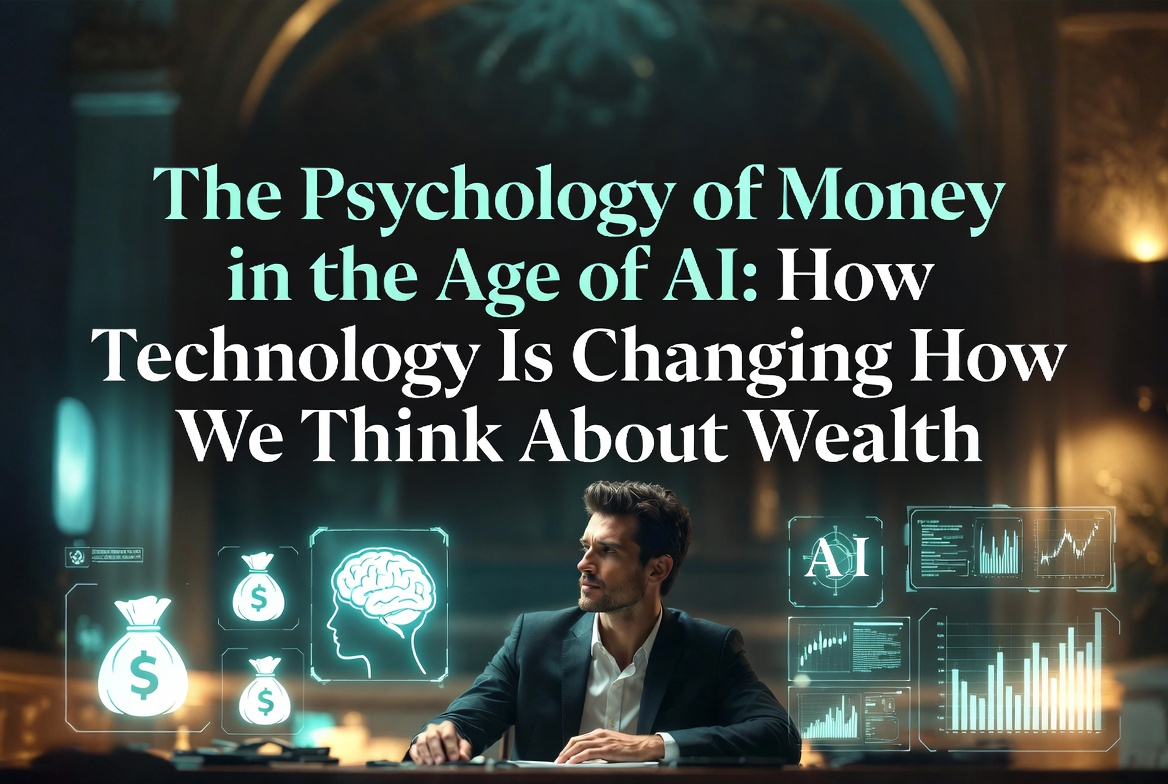
Over the past few years, I’ve watched AI quietly transform not just how we manage money, but how we think about it. It’s changing our fears, our greed, our biases, and even our dreams of wealth. This article is my honest reflection on that shift — what I’ve experienced, what I’ve observed, and what it might mean for all of us.
The Emotional Side of Money Has Always Been the Hardest Part
For most of my life, I believed that money was mostly about numbers and logic. I read books on investing, followed smart people, and tried to make “rational” decisions.
But time after time, I failed.
I held onto losing investments too long because I didn’t want to admit I was wrong. I spent money I shouldn’t have because it made me feel successful. I avoided looking at my accounts when things were bad because the anxiety was too much.
These weren’t rational choices. They were psychological.
Behavioral economists have names for all of them: loss aversion, mental accounting, anchoring, herd mentality. I knew the terms, but knowing them didn’t stop me from falling into the traps.
Then AI entered the picture.
At first, I used it for simple things — analyzing a stock, creating a budget, projecting retirement numbers. But slowly, the conversations became deeper. I started asking AI not just “What should I do?” but “Why do I feel this way about money?” and “Help me see the emotional pattern I’m repeating.”
And that’s when everything started to change.

How AI Is Changing Our Financial Psychology
AI doesn’t eliminate our emotions — but it does something almost as powerful: it helps us see them more clearly and respond to them more wisely.
Here are some of the most important shifts I’ve noticed in myself and in many others:
1. It reduces the power of fear and panic When markets drop, fear takes over. AI can show you historical context, run realistic scenarios, and remind you of your long-term plan in a calm, factual way. It becomes like having a level-headed friend who refuses to let you make emotional decisions in the heat of the moment.
2. It exposes our hidden biases I once asked AI to review my investment history. It gently pointed out that I tended to sell winners too early and hold losers too long — a classic bias. Seeing it laid out so clearly was uncomfortable but incredibly helpful. I started making better decisions after that.
3. It makes abstract concepts feel personal Talking to AI about compound interest or inflation isn’t dry anymore. When you feed it your actual numbers and goals, it shows you what those concepts mean for your life, your family, and your future. It turns numbers into stories.
4. It challenges our limiting beliefs about money Many of us carry deep beliefs like “I’m not good with money” or “Rich people are greedy.” AI can help you examine those beliefs with curiosity instead of shame. It doesn’t judge. It just asks better questions.

The Deeper Question We Need to Ask
As AI becomes a better financial advisor, we face an important question:
Are we using AI to become wiser with money, or are we using it to avoid thinking about money altogether?
The technology is powerful enough to do either.
I’ve seen people use AI to build thoughtful, values-aligned financial lives. I’ve also seen others use it to chase trends, over-optimize, or outsource their responsibility completely.
The difference isn’t in the tool. It’s in the intention.
AI can show you the math. Only you can decide what kind of life the math should serve.
My Hope for the Future
I believe we’re entering a time where high-quality financial wisdom will be available to almost everyone, not just the wealthy.
A young person starting their career can have sophisticated guidance. A family trying to build wealth can get personalized strategies. Someone recovering from financial mistakes can get compassionate, practical help.
But the real gift isn’t the advice itself. It’s the space AI creates for us to have a healthier, more conscious relationship with money.
When we’re no longer overwhelmed by complexity or paralyzed by fear, we can finally ask the deeper questions:
What does wealth mean to me? What kind of life am I actually trying to build? How can money support the things I care about most?
AI won’t answer those questions for us. But it can help us think about them more clearly than ever before.
And that might be the most valuable financial advice of all.
Written by Dhanur